
Opening a container of meal prep salad and finding wilted, watery lettuce sitting in a puddle of dressing is one of the most common reasons people give up on salad meal prep altogether. It is not that salads are a bad meal prep choice. It is that most people build them the same way they would build a salad they plan to eat in the next ten minutes, then wonder why day four looks nothing like day one.
Meal prep salad recipes that do not get soggy come down to a few controllable factors: which ingredients you choose, how you layer them, and how you store them. Once you understand what actually causes sogginess, the fix is fairly simple, and you can build a week of salads that taste as fresh on Friday as they did on Monday.
Why Meal Prep Salads Become Soggy
Sogginess almost always comes from moisture that has nowhere to go. Dressing sitting directly on leaves breaks down their cell structure over time, which is why a dressed salad wilts within hours while an undressed one can last days.
Watery vegetables like cucumber, tomato, and citrus release liquid as they sit, and that liquid pools at the bottom of the container and soaks upward into anything nearby.
Condensation is another quiet culprit. Warm ingredients placed into a sealed container trap steam, which turns into water droplets that drip onto your greens. Also read Easy Vegetarian Meal Prep Ideas for the Week
Once you see the pattern, the solution becomes obvious: keep moisture away from your greens for as long as possible, and only introduce it right before you eat.
Prepping Greens the Right Way
Start with completely dry greens. Wash them, then dry them thoroughly using a salad spinner or clean kitchen towels. Any leftover water on the leaves speeds up wilting, even without dressing involved. According to the FDA, perishable fresh produce such as lettuce should be stored in a clean refrigerator at a temperature of 40°F or below, so a cold, dry fridge is doing real work for you before the salad is even assembled.
Line your container with a paper towel underneath the greens. It absorbs stray moisture through the week and is one of the simplest tricks for keeping leaves crisp. Hearty greens like romaine, kale, and cabbage hold up far better over several days than delicate greens like baby spinach or mixed spring greens, so if you are prepping more than two or three days ahead, hearty greens are the safer base.
Keep the Dressing Separate
This is the single biggest rule of meal prep salads that do not get soggy: dressing never touches the greens until you are ready to eat. Pack dressing in a small lidded container, a mason jar, or a reusable dressing cup, and pour it on right before eating, not before.
If you like the convenience of a fully assembled bowl, toss only the sturdy ingredients with a small amount of dressing and leave the greens completely dry until serving. Also read 10 Easy Meal Prep Recipes for a Stress Free Week.
The Best Containers for Layered Salads
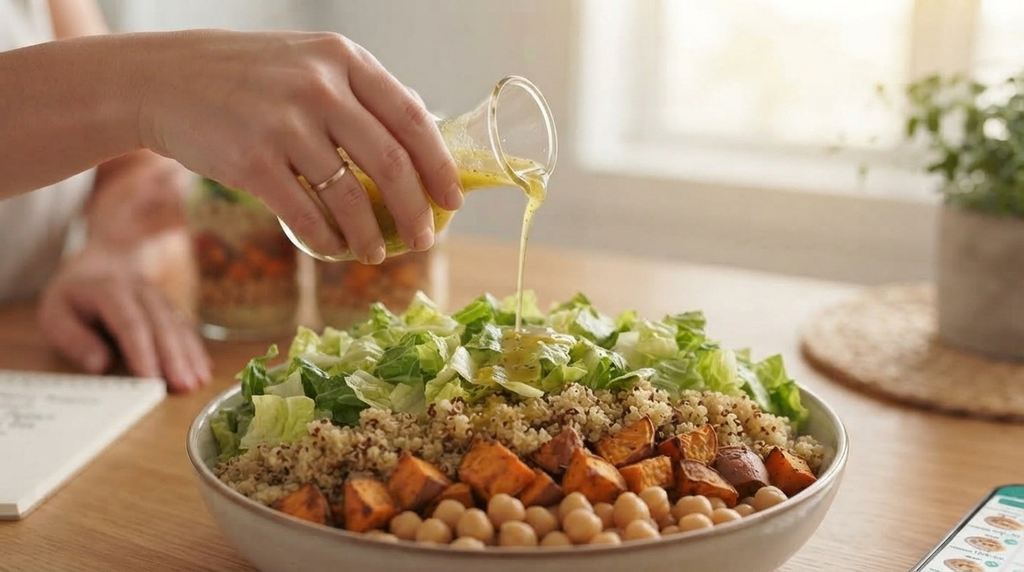
Wide mouth glass jars and rectangular containers with dividers both work well, but the layering order matters more than the container itself. A general rule for building a jar or container from the bottom up:
- Dressing at the very bottom, sealed away from everything else
- Sturdy vegetables and proteins that will not get soggy from dressing contact
- Grains, beans, or pasta
- Cheese, dried fruit, or other mid weight toppings
- Greens on top, completely dry
- Crunchy toppings added just before eating, never packed in advance
When you are ready to eat, either shake the jar upside down so the dressing coats everything on the way out, or dump the whole thing into a bowl and toss.
Ingredients That Hold Up Well Versus Ingredients to Add Fresh
Some ingredients are built for a week in the fridge. Others fall apart within hours. Knowing the difference is what actually prevents soggy salads.
| Holds Up Well for Meal Prep | Better Added Just Before Eating |
| Roasted or raw carrots, bell peppers, and broccoli | Sliced tomatoes and cucumber |
| Cooked grains such as quinoa, farro, or brown rice | Avocado |
| Canned or cooked beans and lentils | Croutons and other crunchy toppings |
| Hard cheeses like feta, parmesan, or cheddar cubes | Nuts and seeds, if you want maximum crunch |
| Roasted or grilled chicken, tofu, or hard boiled eggs | Fresh herbs like basil, which bruise quickly |
| Shredded cabbage and kale | Citrus segments |
| Pickled or marinated vegetables | Delicate lettuce like baby spinach if prepping past three days |
Protein, Grains, and Crunch
Protein choices that meal prep well include grilled chicken thighs or breast, baked tofu, canned tuna or salmon (added the day of, for best texture), chickpeas, and hard boiled eggs. Cook proteins in bulk at the start of the week, cool them completely before packing, and store them separately from the salad if you are worried about them softening the greens.
Grains and pasta add bulk and make a salad feel like a real meal instead of a side dish. Quinoa, farro, brown rice, barley, and even cooled whole grain pasta all work, as long as they are fully cooled before going anywhere near the greens. Warm grains packed straight into a container create the exact condensation problem described earlier.
Crunchy toppings, including nuts, seeds, wonton strips, and croutons, should always be packed in a separate small container or bag and added at the very last moment. This one step alone solves most of the “my salad went soft” complaints people have about meal prep.
Five Practical Salad Combinations
Grain bowl salad: farro, roasted sweet potato, chickpeas, kale, feta, lemon tahini dressing on the side.
Chicken and veg salad: grilled chicken, shredded carrot, red cabbage, bell pepper, brown rice, sesame ginger dressing on the side.
Mediterranean salad: cucumber, roasted red pepper, olives, chickpeas, romaine, feta, red wine vinaigrette on the side.
Southwest salad: black beans, corn, bell pepper, shredded cabbage, quinoa, lime vinaigrette on the side, tortilla strips added fresh.
Tuna and white bean salad: white beans, cherry tomatoes added fresh, romaine, red onion, olive oil and lemon dressing on the side.
How to Store and Maintain Freshness All Week
Store finished salad containers toward the back of the fridge where temperatures are most consistent, not in the door, where temperature swings happen every time it opens. Most prepped salads with dressing kept separate hold up well for four to five days when the ingredients are chosen carefully and stored cold. If you are unsure how long a specific prepped ingredient is safe to keep, the general food safety guidance from university extension sources notes that leftovers can be kept in the refrigerator for three to four days or frozen for two to six months, which is a reasonable benchmark for cooked proteins and grains used in your salads.
Real Life Example
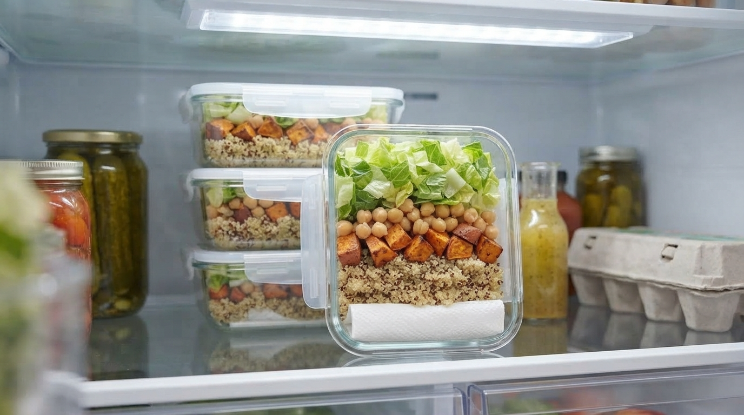
Picture a typical Sunday prep session: four containers, one for each weekday. Each one gets dressing at the bottom, then roasted vegetables and cooked grains, then a layer of shredded cabbage and kale rather than delicate spring mix, because it needs to survive until Thursday. Crunchy chickpeas and a small bag of pepitas go into the fridge separately, ready to be tossed in at lunchtime. By Thursday, the salad still has crunch and structure, not because anything unusual happened, but because moisture was kept away from the greens the entire time.
Common Salad Meal Prep Mistakes
Packing warm ingredients straight from the stove, mixing dressing in before storage, using delicate greens for a five day prep window, skipping the paper towel liner, and cramming everything into one container instead of separating wet and dry components are the mistakes that show up again and again. Each one is easy to fix once you know to look for it.
Conclusion
Meal prep salads that do not get soggy are not about finding a magic recipe. They are about controlling moisture at every stage, from washing and drying your greens to keeping dressing and crunchy toppings separate until the moment you eat. Build your salads with sturdy ingredients as the foundation, save the delicate ones for last, and you will open a fresh, crisp salad every single day of the week instead of a wilted one by Wednesday.
If you already lean on quick meal planning during busy weeks, this approach pairs naturally with the kind of fast, practical cooking covered in Fast and Healthy Quick Lunch Ideas for Busy People at Home, and the grains and proteins used here can also be batch cooked using the same efficient mindset behind Healthy One Pot Meals in Less Than 30 Minutes.
FAQs
Why does my meal prep salad get watery so fast? Watery salads are usually caused by dressing sitting directly on the greens, moisture releasing vegetables like tomato and cucumber, or warm ingredients trapped in a sealed container. Keeping dressing separate and letting ingredients cool completely before packing solves most of this.
What is the best way to keep salad dressing separate for meal prep? Pack dressing in a small lidded container, jar, or dressing cup and store it apart from the greens. Pour it on right before eating rather than mixing it in ahead of time.
Which greens last the longest in meal prep salads? Hearty greens such as romaine, kale, and shredded cabbage hold up much better over several days than delicate greens like baby spinach or spring mix.
Can I meal prep salads with tomatoes and cucumbers? You can, but they release water as they sit, so it is best to add them just before eating rather than packing them in with the rest of the salad for the full week.
How long do meal prep salads with dressing kept separate actually last? Most prepped salads stay fresh for around four to five days when stored cold with dressing on the side, though this varies based on which ingredients you include.
Should I add nuts, seeds, or croutons before storing my salad? No, pack crunchy toppings separately and add them right before eating so they keep their texture instead of going soft from nearby moisture.
Is it safe to pack warm grains or protein straight into a salad container? It is better to let cooked grains and proteins cool completely first. Packing warm food into a sealed container traps steam, which creates condensation that drips onto your greens.