
Chicken is probably the single most useful thing you can batch cook if you are trying to eat better during a busy week. It works in salads, wraps, bowls, and sandwiches, it holds protein well, and it is forgiving enough that even a slightly imperfect cooking session still turns out something edible.
The catch is that chicken is also one of the easiest proteins to overcook into something dry and forgettable, which is usually why people give up on meal prepping it after one bad batch.
This guide walks through how to meal prep chicken for the week using three practical cooking methods, how to keep it from drying out, and how to actually use it across different meals so day four does not feel identical to day one.
Choosing the Right Chicken Cuts for Meal Prep
Boneless, skinless chicken breasts are the most common choice because they are lean, cook fairly quickly, and slice cleanly for salads or bowls. Boneless thighs are a close second and are more forgiving if you accidentally cook them a bit past done, since the extra fat keeps them from drying out as fast. For meal prep purposes, either cut works well. If you tend to overcook things, thighs are the safer bet.
Prepping Chicken Before You Cook It
A few minutes of prep before cooking makes a noticeable difference in the final result. Pat the chicken dry with a paper towel so it browns properly instead of steaming. If the breasts are uneven in thickness, pound the thicker end down or slice larger breasts in half horizontally so they cook evenly. Trim any visible excess fat, and if you are cooking a large batch, portion the chicken into roughly similar sizes so everything finishes cooking around the same time.
Basic Seasoning That Works for Multiple Meals
Since this chicken is going into several different meals over the week, a simple, fairly neutral seasoning blend gives you more flexibility than something heavily flavored in one direction. A combination of olive oil, salt, pepper, garlic powder, and paprika works for salads, wraps, and bowls alike. If you want more variety, season half the batch one way and the other half differently, for example a lemon and herb mix for one portion and a smoky chili and cumin blend for the other.
Three Easy Chicken Meal Prep Methods
Method One: Oven Baked Chicken
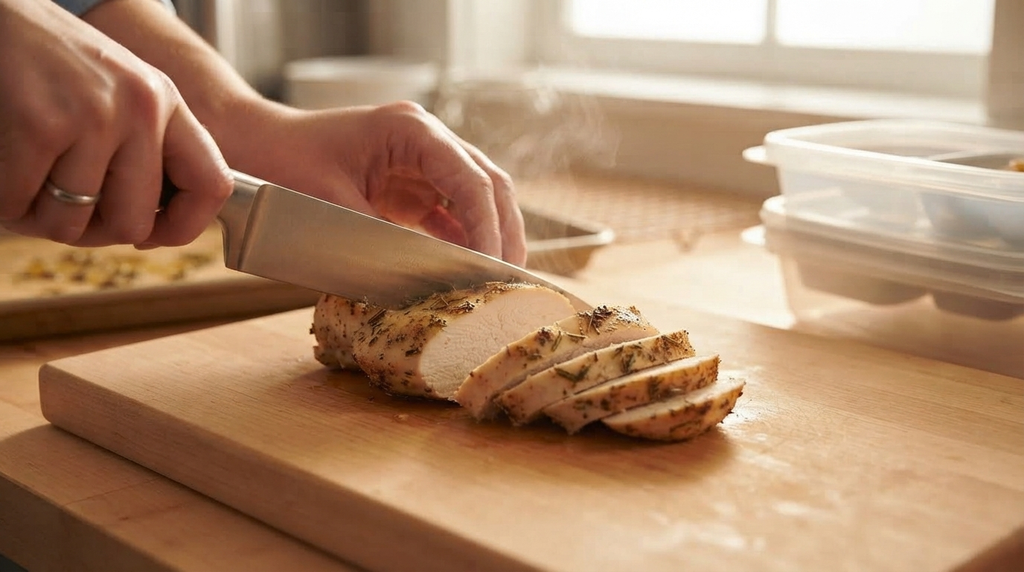
Preheat the oven to 425°F. Arrange seasoned chicken breasts or thighs on a lined baking sheet, leaving space between pieces so they roast rather than steam. Bake for about 20 to 25 minutes depending on thickness, checking with a food thermometer toward the end. This method is the easiest to walk away from while cooking, which makes it convenient if you are prepping other food at the same time.
Method Two: Stovetop or Skillet Chicken
Heat a tablespoon of oil in a skillet over medium heat. Add the seasoned chicken and cook for about 5 to 7 minutes per side, depending on thickness, until it reaches a safe internal temperature. This method gives you more browning and control, but it requires more attention since you are cooking in batches if your pan is not large enough for everything at once. Also read Freezer Meal Prep Recipes for Busy Weeknights.
Method Three: Air Fryer Chicken
Preheat the air fryer to 380°F. Place chicken in a single layer, avoiding overcrowding, and cook for roughly 12 to 15 minutes, flipping halfway through. The air fryer produces a texture closer to roasted chicken with a bit more browning than the oven, and it tends to cook a bit faster for smaller batches.
| Method | Preparation Approach | Best Use | Practical Considerations |
| Oven baked | Hands off, one baking sheet | Larger batches, hands off cooking | Takes slightly longer, easy to multitask |
| Skillet | Direct heat, more attention needed | Smaller batches, extra browning | Requires standing at the stove, may need multiple batches |
| Air fryer | Small batch, quick cooking | Weeknight quick prep, crispier texture | Limited capacity per batch, works best for one or two servings at a time |
How to Prevent Dry Chicken
Dry chicken almost always comes down to two things: overcooking and cutting into it too soon. According to the United States Department of Agriculture, poultry should reach a safe minimum internal temperature of 165°F, measured with a food thermometer in the thickest part of the meat. Cooking past that point does not make chicken safer, it just makes it drier. Letting the chicken rest for a few minutes after cooking before slicing also helps it hold onto its juices rather than losing them all at once on the cutting board.
Portioning Cooked Chicken for the Week
Once cooked, let the chicken cool slightly before portioning it into meal sized containers. Some people prefer slicing everything right after cooking so it is ready to add to any dish without extra prep during the week. Others prefer keeping it whole and slicing it fresh each day, which can help it stay slightly moister. Either approach works, so pick whichever fits how you actually cook during the week.
How to Use Meal Prepped Chicken Across Different Meals
Chicken for Salads
Sliced chicken over greens with whatever vegetables you have on hand turns a basic salad into a full meal. A simple vinaigrette keeps this fast without needing a separate sauce prepared in advance.
Chicken for Wraps
Chopped chicken with a spoon of hummus or yogurt based sauce, rolled into a tortilla with lettuce and shredded carrots, makes a wrap that takes under five minutes to assemble once the chicken is already cooked.
Chicken for Rice or Grain Bowls
Chicken over rice, quinoa, or farro with roasted vegetables and a simple sauce is one of the most flexible meal prep combinations, since you can rotate the grain and vegetables while keeping the chicken the same.
Chicken for Sandwiches
Sliced or shredded chicken with a light spread and whatever vegetables you like works as a quicker alternative to deli meat, without the added sodium many packaged lunch meats contain.
Chicken for Quick Dinners
On busier nights, prepped chicken can go straight into a stir fry, a quick pasta dish, or alongside a simple side of vegetables, cutting a large chunk of the cooking time out of dinner. If you are also looking for more fast dinner ideas, our guide to healthy five ingredient easy dinner meals pairs well with prepped chicken.
Storing Chicken Safely
Cooked chicken should go into shallow, airtight containers and be refrigerated within about two hours of cooking. Commonly cited guidance suggests cooked chicken keeps well in the refrigerator for a few days and can be frozen for a few months for best quality. For a full breakdown by food type, the Cold Food Storage Chart from FoodSafety.gov is worth bookmarking rather than relying on memory.
Freezing and Reheating Cooked Chicken
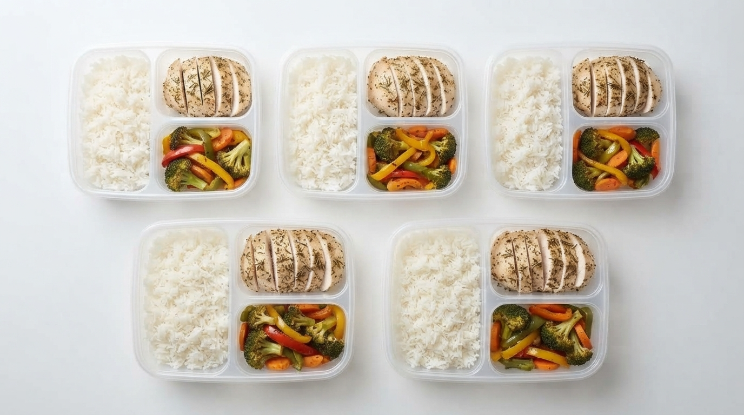
If you are prepping more than you will eat within a few days, freezing a portion is the more reliable option than letting it sit at the back of the fridge. Thaw frozen chicken in the refrigerator rather than on the counter. When reheating, the USDA recommends bringing leftovers back to an internal temperature of 165°F, and food should never sit out at room temperature in the temperature danger zone between 40°F and 140°F for more than about two hours.
Keeping the Same Chicken From Feeling Repetitive
The trick to not getting bored of the same batch of chicken is changing everything around it rather than the chicken itself. Swap the sauce, the grain, the vegetable, or the format between a bowl one day and a wrap the next. Cooking two different seasoning profiles in the same batch, as mentioned earlier, also helps break up the monotony without any extra cooking sessions during the week.
Practical Example
A reasonable Sunday session looks like this: season and bake two pounds of chicken breast in the oven while you prep vegetables on the side. Once cooled, slice half for salads and wraps and leave the other half whole for grain bowls later in the week. That single batch, roughly forty five minutes including cleanup, can realistically cover lunches and a couple of dinners for one person through Thursday.
Conclusion
Learning how to meal prep chicken for the week is less about finding one perfect recipe and more about building a repeatable system: pick a cooking method, season it simply, cook it to a safe temperature without overdoing it, and plan a few different ways to use it. Once that system clicks, chicken stops being a chore and becomes the base you build the rest of your week around.
Frequently Asked Questions
Which chicken cut is best for meal prep, breast or thigh?
Both work well. Breasts are leaner and slice cleanly, while thighs are more forgiving if slightly overcooked because of their higher fat content.
How long does meal prepped chicken last in the fridge?
Cooked chicken is commonly recommended to be eaten within a few days when stored properly in an airtight container in the refrigerator.
Can I freeze cooked chicken for meal prep?
Yes, cooked chicken generally freezes well for a few months for best quality. Thaw it in the refrigerator rather than at room temperature before reheating.
What temperature should chicken reach to be safe to eat?
The USDA recommends cooking chicken to an internal temperature of 165°F, checked with a food thermometer in the thickest part of the meat.
Which cooking method is fastest for meal prepping chicken?
The air fryer tends to be the quickest for smaller batches, while the oven is more convenient for larger batches since it requires less hands on attention.
How do I keep chicken from drying out when reheating it?
Reheat gently, either covered in the microwave with a splash of water or broth, or in a skillet over low heat, rather than blasting it on high heat for a long time.
Can I use the same seasoning for all my meal prep chicken?
You can, but seasoning half the batch differently from the other half is an easy way to add variety across the week without extra cooking sessions.