
7 Key Differences You Should Know Before Choosing
The way people watch television has changed significantly over the last few years. Traditional cable and satellite TV are no longer the only options for enjoying movies, live channels, sports, and entertainment. Internet-based streaming services have introduced more flexibility and convenience, allowing viewers to watch their favourite content on different devices.
Two popular terms in modern television technology are IPTV and OTT. Although both deliver video content through the internet, they work in different ways and offer different viewing experiences. Understanding IPTV vs OTT can help you choose the right streaming option according to your entertainment needs, budget, internet connection, and preferred content.
Whether you enjoy live television, on-demand movies, sports, or television series, knowing the differences between these technologies can make your decision easier.Understanding IPTV vs OTT is important for viewers who want to choose the right internet-based entertainment service.
Table of Contents
What Is IPTV?
IPTV stands for Internet Protocol Television. It is a television delivery system that uses internet protocol networks to transmit television programmes and video content to viewers.
Unlike traditional cable or satellite television, IPTV delivers content through an internet connection. It can provide live television channels, video-on-demand libraries, and catch-up television services.
IPTV is often associated with dedicated service providers that manage how content is delivered to subscribers. Depending on the provider, viewers may access IPTV through a compatible television, streaming box, smartphone, tablet, or computer.When comparing IPTV vs OTT, the main difference is often related to content delivery and service infrastructure.
How Does IPTV Work?
IPTV works by transmitting video content in digital data packets over an IP network. When a viewer selects a channel or programme, the IPTV system sends the requested content to a compatible device.
The basic process usually includes:
- A content provider prepares television programmes and video streams.
- The IPTV platform manages and distributes the content.
- The viewer connects through an internet-enabled device.
- The selected programme is delivered through the network.
- The device decodes the stream and displays the video.
Some IPTV services use managed networks, while others operate over regular broadband connections. The exact technology depends on the provider and its infrastructure.
Main Features of IPTV
Live Television Channels
IPTV can provide live television channels, allowing viewers to watch news, sports, entertainment, and other programmes as they are broadcast.
Video on Demand
Many IPTV platforms offer video-on-demand libraries. This allows users to select available movies and programmes whenever they want.
Catch-Up Television
Some providers offer catch-up features that let viewers watch selected programmes after their original broadcast time.
Multiple Device Compatibility
Depending on the service, IPTV may work on Smart TVs, Android devices, streaming boxes, tablets, and computers.
What Is OTT?
OTT stands for Over-The-Top. It refers to the delivery of video, audio, and other digital content directly over the internet without requiring a traditional cable or satellite television subscription.
OTT services generally use standard internet connections to deliver content through dedicated applications or websites. Popular examples include Netflix, Amazon Prime Video, Disney+, and other streaming platforms.
OTT has become popular because it gives viewers greater control over what they watch and when they watch it. Users can often subscribe directly to a platform and access its content library through a compatible device.
The IPTV vs OTT comparison helps explain how modern streaming platforms deliver entertainment to different audiences.
How Does OTT Work?
OTT services deliver content through the public internet. When a user opens a streaming application and selects a movie or television programme, the platform sends the requested video to the device.
The process generally works as follows:
- A streaming platform obtains or produces video content.
- The content is stored and prepared for online delivery.
- The viewer opens the platform’s website or application.
- The selected video is transmitted through the internet.
- The application plays the content on the user’s device.
OTT platforms commonly use content delivery networks (CDNs) to distribute video efficiently across different regions.
Main Features of OTT
On-Demand Entertainment
OTT platforms allow users to watch movies, documentaries, and television series whenever they prefer.
Original Content
Many OTT companies produce exclusive films, series, and documentaries that are available only through their platforms.
Flexible Subscriptions
Some OTT platforms offer monthly or annual subscription plans, while others provide free, advertising-supported content.
Personalised Recommendations
OTT applications often recommend programmes based on viewing history, ratings, and user preferences.
IPTV vs OTT: Understanding the Main Differences
Although IPTV and OTT both use internet technology, they are not exactly the same. Their delivery systems, service structures, content libraries, and subscription models can vary.
Content Delivery Method
One of the main differences between IPTV and OTT is how the content reaches viewers.
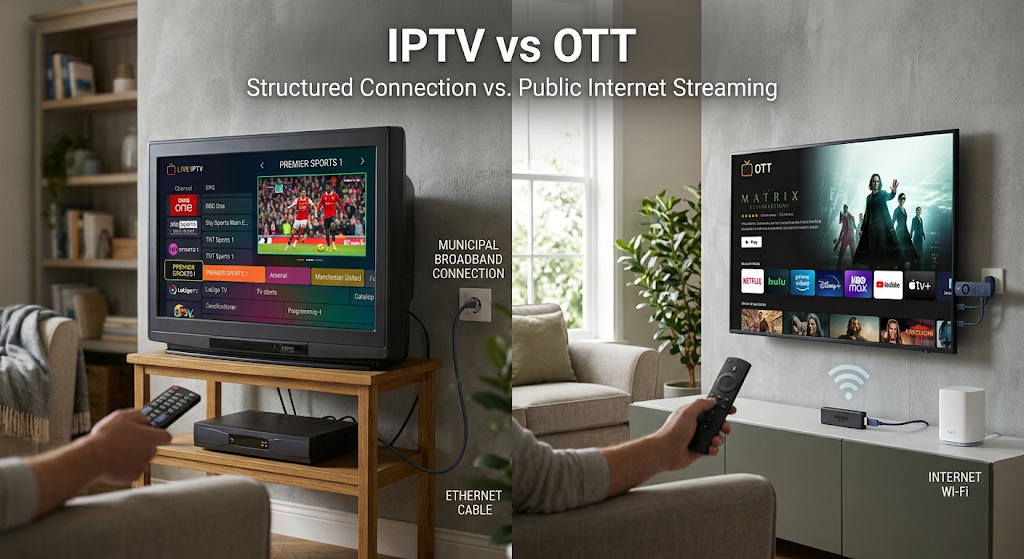
IPTV may operate through a managed network controlled by a telecommunications company or service provider. Some IPTV services also use standard broadband internet.
OTT services generally deliver content through the public internet using applications and websites.
This difference can affect network management, service quality, and the way providers distribute content.
Live TV and On-Demand Content
IPTV is often associated with live television channels, although many services also provide on-demand libraries.
OTT platforms are commonly known for on-demand entertainment. However, some OTT services also offer live sports, news, and television channels.
Therefore, the difference is not simply that IPTV offers live TV and OTT offers movies. Both technologies can support different types of content.
Subscription Models
IPTV providers may offer packages containing different television channels, on-demand programmes, or additional features.
OTT platforms generally provide individual subscriptions for access to their content libraries. Some services also have free plans supported by advertisements.
The final cost depends on the provider, available features, subscription period, and regional pricing.
Device Compatibility
Both IPTV and OTT can support a range of internet-connected devices.
IPTV may require a compatible application, set-top box, or supported streaming device. OTT platforms usually provide their own applications for Smart TVs, smartphones, tablets, computers, and streaming devices.
Before subscribing, users should check whether their preferred service supports their existing devices.
Internet Requirements
Both technologies require a stable internet connection for online streaming.
The required speed depends on video resolution, compression, network congestion, and the number of devices using the connection.
| Video Quality | General Recommended Speed |
|---|---|
| Standard Definition (SD) | 3–5 Mbps |
| High Definition (HD) | 5–10 Mbps |
| Full HD | 10–15 Mbps |
| 4K Ultra HD | 25 Mbps or higher |
These figures are general estimates rather than fixed requirements. A faster and more stable connection can improve the viewing experience.
Content Ownership and Availability
IPTV providers may distribute content under licensing agreements with broadcasters and other rights holders.
OTT platforms also obtain distribution rights or produce original content. Their libraries can vary depending on country, licensing agreements, and subscription plans.
Users should always choose legitimate services that have permission to distribute the content they offer.
Advantages of IPTV
IPTV can be a suitable option for viewers who prefer a television-style experience with access to live channels and other programming.
Another important point in IPTV vs OTT is the availability of live television channels and interactive viewing features.
Access to Live Television
One major advantage of IPTV is the ability to watch live channels through an internet connection. This can be useful for people who enjoy live news, sports, and entertainment.
Flexible Viewing Options
Depending on the provider, IPTV can combine live television, catch-up programmes, and video-on-demand content in one service.
Compatibility With Different Devices
Many IPTV services support multiple devices, making it possible to watch content on a television, smartphone, tablet, or computer.
Interactive Features
Some IPTV platforms offer electronic programme guides, pause and replay features, recording options, and personalised channel lists.
These features depend on the provider and the equipment being used.
Disadvantages of IPTV
Despite its benefits, IPTV also has some limitations.
Internet Dependency
IPTV requires a working internet connection. If the connection becomes unstable, viewers may experience buffering, interruptions, or reduced picture quality.
Provider Reliability
The quality of an IPTV experience depends heavily on the provider’s infrastructure, server capacity, and network management.
Device and Application Requirements
Some IPTV services require specific applications or compatible devices. Users should check these requirements before purchasing a subscription.
Legal and Licensing Concerns
Not every IPTV service is authorised to distribute the channels or programmes it advertises. Choosing an unlicensed provider can create legal and security risks.
Advantages of OTT
OTT platforms have changed the way people discover and enjoy digital entertainment.
In the IPTV vs OTT discussion, OTT stands out for its flexible on-demand entertainment experience.
Watch Content Anytime
One of the biggest advantages of OTT is the ability to watch available programmes whenever it suits the viewer.
There is no need to follow a traditional television broadcast schedule for on-demand content.
Large Entertainment Libraries
Many OTT platforms provide extensive collections of films, television series, documentaries, and original productions.
Easy Access
Most OTT platforms offer straightforward applications for popular devices. Users can generally sign in and start watching after choosing a suitable subscription.
Personalised Entertainment
Recommendation systems help users discover new programmes based on their interests and previous viewing activity.
Flexible Plans
Some OTT providers offer different subscription levels, including advertising-supported and premium options.
Disadvantages of OTT
OTT services are convenient, but they also have a few limitations.
Content Is Spread Across Platforms
A movie or television series may be available on one platform but not another. Viewers who want access to different libraries may need multiple subscriptions.
Subscription Costs Can Increase
Although individual plans may appear affordable, subscribing to several platforms can increase monthly entertainment expenses.
Regional Restrictions
Content availability can differ between countries because of licensing agreements and distribution rights.
Internet Connection Is Essential
OTT streaming requires an internet connection. Slow speeds or network interruptions can affect playback quality.
IPTV vs OTT: Which One Is Better?
There is no single answer because the best option depends on what you want to watch.
IPTV may be a better choice for people who prefer live television channels and want a traditional TV-style experience delivered through internet technology.
OTT may be more suitable for viewers who mainly enjoy movies, original series, documentaries, and on-demand entertainment.
Choose IPTV If You Prefer
- Live television channels.
- News and sports broadcasts.
- A television-style viewing experience.
- Live and on-demand content in one package.
- Features such as programme guides and catch-up TV, when available.
Choose OTT If You Prefer
- Movies and television series.
- Original streaming productions.
- Flexible on-demand viewing.
- Personalised recommendations.
- Individual subscriptions to entertainment platforms.
Can You Use IPTV and OTT Together?
Yes. IPTV and OTT are not necessarily competing choices. Many households use both technologies.
For example, someone may use an IPTV service for authorised live television channels and an OTT platform for movies and exclusive television series.
Using both can provide access to different types of entertainment without relying on a single platform.
Factors to Consider Before Choosing a Streaming Service
Before purchasing an IPTV or OTT subscription, consider the following points.
Check Content Availability
Make sure the service offers the channels, films, programmes, or sports content you actually want to watch.
Compare Subscription Prices
Review the monthly and annual costs. Check whether the service includes extra charges, device limits, or automatic renewal conditions.
Review Device Compatibility
Confirm that the application works with your Smart TV, smartphone, tablet, streaming box, or computer.
Evaluate Streaming Quality
Look for services that provide suitable video resolution, stable playback, and reliable customer support.
Check Legal Permissions
Choose providers that have the necessary rights to distribute their content. Be careful with services advertising unusually large premium channel collections at extremely low prices without explaining their licensing.
Consider Privacy and Security
Use official applications and secure payment methods. Review the provider’s privacy policy and avoid sharing account details with unknown websites.
The Future of IPTV and OTT
Internet-based entertainment continues to develop as broadband networks, streaming devices, and video compression technologies improve.
IPTV providers may introduce better programme guides, more personalised features, improved video quality, and additional interactive services.
OTT platforms are also expected to expand their original content, live programming, advertising-supported options, and personalised recommendations.
Technologies such as 4K streaming, cloud infrastructure, artificial intelligence, and improved content delivery networks will continue to influence how people watch digital entertainment.
The distinction between IPTV and OTT may also become less obvious as platforms combine live television, on-demand programmes, and interactive features.
Frequently Asked Questions About IPTV vs OTT
What Is the Main Difference Between IPTV and OTT?
IPTV delivers television content through IP networks and may use managed infrastructure, while OTT delivers content directly over the public internet through applications and websites.
Is IPTV Better Than OTT?
Neither technology is automatically better. IPTV may suit viewers who prefer live television, while OTT is often ideal for people who enjoy on-demand movies and series.
Does OTT Require an Internet Connection?
Yes. OTT services use the internet to deliver video content. Some platforms allow users to download selected programmes for offline viewing.
Can IPTV Work on a Smart TV?
Yes. Many IPTV services support compatible Smart TVs through dedicated applications or external streaming devices. Availability depends on the provider and television model.
Is Netflix an IPTV Service?
Netflix is generally classified as an OTT streaming service because it delivers content directly over the public internet through its application and website.
Can IPTV and OTT Be Used on the Same Device?
Yes. A compatible Smart TV or streaming device can support IPTV applications and OTT platforms at the same time.
Is IPTV Legal?
IPTV technology itself is legal. However, a service must have the necessary rights and permissions to distribute the channels and programmes it provides.
The final decision in IPTV vs OTT depends on your budget, viewing preferences, internet speed, and content requirements.
Conclusion
Understanding IPTV vs OTT makes it easier to choose the right entertainment option. Both technologies use internet connectivity to deliver digital content, but they differ in their delivery methods, service structures, and typical viewing experiences.
IPTV is often associated with live television and managed content delivery, while OTT is widely recognised for on-demand movies, series, and digital entertainment applications.
The right choice depends on your viewing habits, budget, preferred content, internet connection, and device compatibility. Before subscribing, compare the available features and make sure the provider has the appropriate content distribution rights.
With the right service and a reliable internet connection, both IPTV and OTT can provide a convenient and flexible way to enjoy modern digital entertainment.