
Almost everyone who starts meal prepping quits at least once before it sticks. Usually it is not because meal prep does not work, it is because the first attempt was built around habits that were never going to last more than a week or two.
Knowing the common meal prep mistakes to avoid before you start saves you from the most frustrating version of learning them the hard way, which is opening the fridge on day three to find a container of something you clearly do not want to eat again.
This list covers ten mistakes that show up constantly among people new to meal prep, why each one tends to happen, and what a more sustainable approach actually looks like.
Mistake One: Preparing Too Much Food
Why it happens
Enthusiasm is high in the first week, and it feels efficient to cook enough for the entire week in one long session, so people go big right out of the gate.
Why it causes problems
Large batches of the same meal get boring fast, and if life gets in the way, food that was cooked days ago starts to feel less appealing or gets pushed past a safe window to eat.
What to do instead
Start with three or four days worth of meals rather than a full seven. Once the routine feels manageable, scale up gradually. Also read How to Meal Prep for One Person Without Waste.
Mistake Two: Choosing Too Many Complicated Recipes
Why it happens
Recipe inspiration from social media or cooking shows often looks exciting, so beginners pick several ambitious dishes for their first prep session.
Why it causes problems
Complicated recipes take longer, use more dishes, and are harder to repeat consistently, which makes the whole process feel exhausting rather than helpful.
What to do instead
Pick one or two simple recipes with overlapping ingredients for your first few weeks. Save the more involved dishes for when meal prep already feels like second nature.
Mistake Three: Not Planning Portions
Why it happens
It is easy to cook a full recipe without thinking about how many servings you actually need for the week, especially if you are cooking for one person using a recipe meant for four.
Why it causes problems
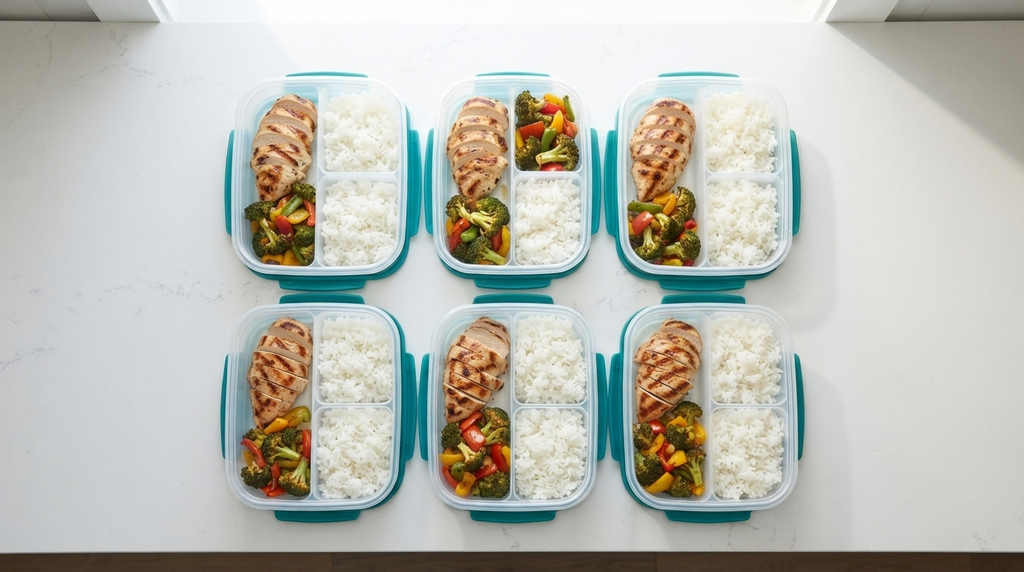
You either end up with far too much food that goes to waste, or portions that are inconsistent, leaving some days with too little and others with leftovers stacking up. Also read Freezer Meal Prep Recipes for Busy Weeknights
What to do instead
Decide how many meals you actually need before you shop or cook, and divide the recipe or the finished food accordingly using a kitchen scale or measuring cups if needed.
Mistake Four: Ignoring Food Storage Guidelines
Why it happens
Beginners often assume that once food is in the fridge, it is fine until it looks or smells off, without checking how long different foods actually stay safe.
Why it causes problems
Some foods, particularly cooked meat, poultry, and dairy based dishes, have a shorter safe window than people expect, which raises the risk of foodborne illness if eaten too late.
What to do instead
Check a reliable reference like the Cold Food Storage Chart from FoodSafety.gov when you are unsure, and label containers with the date they were prepared.
Mistake Five: Storing Food Incorrectly
Why it happens
Using the wrong containers, packing food while it is still hot, or stacking containers too tightly in the fridge are common habits people do not think twice about.
Why it causes problems
Food that cools too slowly spends more time in the temperature range where bacteria grow quickly, and poorly sealed containers lead to faster spoilage and dried out food.
What to do instead
Let hot food cool briefly before sealing it, use shallow airtight containers so food cools evenly, and leave enough space in the fridge for air to circulate around containers.
Mistake Six: Making Every Meal Identical
Why it happens
Repeating one recipe across the entire week feels efficient and keeps grocery shopping simple.
Why it causes problems
Eating the exact same meal five or six days in a row is one of the fastest ways to quit meal prep entirely, since food fatigue sets in quickly for most people.
What to do instead
Cook a few base ingredients, like a grain, a protein, and a vegetable, then vary the sauce, seasoning, or format across the week so it does not feel like eating the same dish on repeat.
Mistake Seven: Shopping Without a Plan
Why it happens
It feels natural to walk through the grocery store and grab things that look good, planning meals around whatever ends up in the cart.
Why it causes problems
This approach often leads to mismatched ingredients, forgotten items, and more trips to the store mid week, which undercuts the entire point of prepping ahead.
What to do instead
Write a simple list based on the meals you have already decided to make. The Academy of Nutrition and Dietetics offers practical guidance on planning meals and shopping that is worth reviewing if this step tends to trip you up.
Mistake Eight: Forgetting Ingredients Already at Home
Why it happens
It is easy to shop from a mental list without actually checking the fridge or pantry first.
Why it causes problems
You end up buying duplicates of things you already have, wasting money and eventually food when the extra items go unused.
What to do instead
Do a quick check of your fridge, freezer, and pantry before shopping, and build part of your meal plan around what needs to be used up.
Mistake Nine: Spending Too Much Time Cooking

Why it happens
Beginners often treat meal prep day as an event, trying to cook everything from scratch, including things that could realistically be simplified.
Why it causes problems
A prep session that regularly takes three or four hours becomes something people start dreading, which is a common reason the habit does not last.
What to do instead
Lean on shortcuts where they genuinely help, such as pre washed greens, canned beans, or a rotisserie chicken, especially in the early weeks while you are still building the habit.
Mistake Ten: Trying to Build a Perfect Routine Instead of a Sustainable One
Why it happens
It is tempting to copy an elaborate meal prep routine seen online, with color coded containers and a rigid weekly schedule.
Why it causes problems
A routine that requires perfection tends to collapse the first time a week gets busy or unpredictable, and beginners often give up entirely rather than adjusting.
What to do instead
Build a flexible routine that can bend, not break. If Sunday prep does not happen, a shorter Wednesday session to cover the back half of the week is still a win.
| Mistake | Why It Happens | Better Solution |
| Preparing too much food | Overestimating capacity in the first week | Start with 3 to 4 days worth of meals |
| Too many complicated recipes | Recipe inspiration feels exciting | Choose 1 to 2 simple recipes to start |
| Not planning portions | Cooking a full recipe without checking servings needed | Divide meals based on actual weekly needs |
| Ignoring storage guidelines | Assuming food is fine until it looks off | Check a trusted storage chart and label containers |
| Storing food incorrectly | Packing hot food or using poor containers | Cool food briefly, use airtight shallow containers |
| Making every meal identical | Feels simpler for shopping and cooking | Vary sauces and formats around the same base ingredients |
| Shopping without a plan | Grabbing whatever looks appealing | Shop from a list built around planned meals |
| Forgetting what is at home | Shopping from memory instead of checking first | Check fridge and pantry before writing a list |
| Spending too much time cooking | Cooking everything from scratch | Use simple shortcuts where they genuinely help |
| Chasing a perfect routine | Copying elaborate online setups | Build a flexible plan that can adjust to a busy week |
Practical Example
Consider someone who spends their first Sunday cooking five different elaborate recipes, ending up with a fridge full of mismatched containers and a four hour cooking session behind them. By Wednesday, half the food is untouched and they feel too tired to keep going.
Compare that to a simpler approach: one baked protein, one roasted vegetable, and one grain, portioned into five containers with two different sauces to rotate through. The second version takes under an hour and is far more likely to actually get eaten.
Conclusion
Most meal prep mistakes come from trying to do too much too soon rather than a lack of effort or discipline. Starting small, planning realistic portions, storing food properly, and building in some variety are the changes that make the biggest difference for beginners.
Once those habits feel natural, pairing them with a repeatable protein routine, like the one in our guide on how to meal prep chicken for the week, makes the whole process even easier to sustain.
Frequently Asked Questions
What is the biggest mistake beginners make with meal prep?
Preparing too much food and choosing overly complicated recipes are two of the most common issues, since both make the habit harder to sustain past the first week or two.
How much food should I prep when I am just starting out?
Starting with three or four days worth of meals is generally more manageable than committing to a full week right away.
How do I stop meal prep from feeling repetitive?
Cook base ingredients like a protein, grain, and vegetable, then vary the sauce or format across the week instead of repeating one identical meal.
Is it a mistake to skip meal prep on a busy week?
Not necessarily. Adjusting your routine, such as a shorter mid week session instead of skipping entirely, is often more sustainable than trying to force a full prep day every single week.
How long can meal prepped food safely stay in the fridge?
This depends on the food type, but most cooked meals are best eaten within a few days. Checking a trusted storage chart when unsure is a good habit to build.
Do I need special containers to meal prep successfully?
No, basic airtight containers are enough. The container matters less than making sure food is cooled properly before sealing and stored at a safe temperature.
What should I do if I keep failing at meal prep?
Look at which of the ten mistakes above sound familiar, then simplify one part of your routine at a time rather than trying to fix everything at once.