
Meal prepping is one of the easiest ways to save time, reduce food waste, and make healthier eating a regular part of your life. However, if you are new to meal prep, knowing what to buy at the grocery store can feel overwhelming. You might purchase too many ingredients, forget essential items, or end up with food you never use.
The good news is that meal prep does not have to be complicated or expensive. With a little planning and a well-organized shopping list, you can prepare delicious meals for the entire week without spending hours in the kitchen every day.
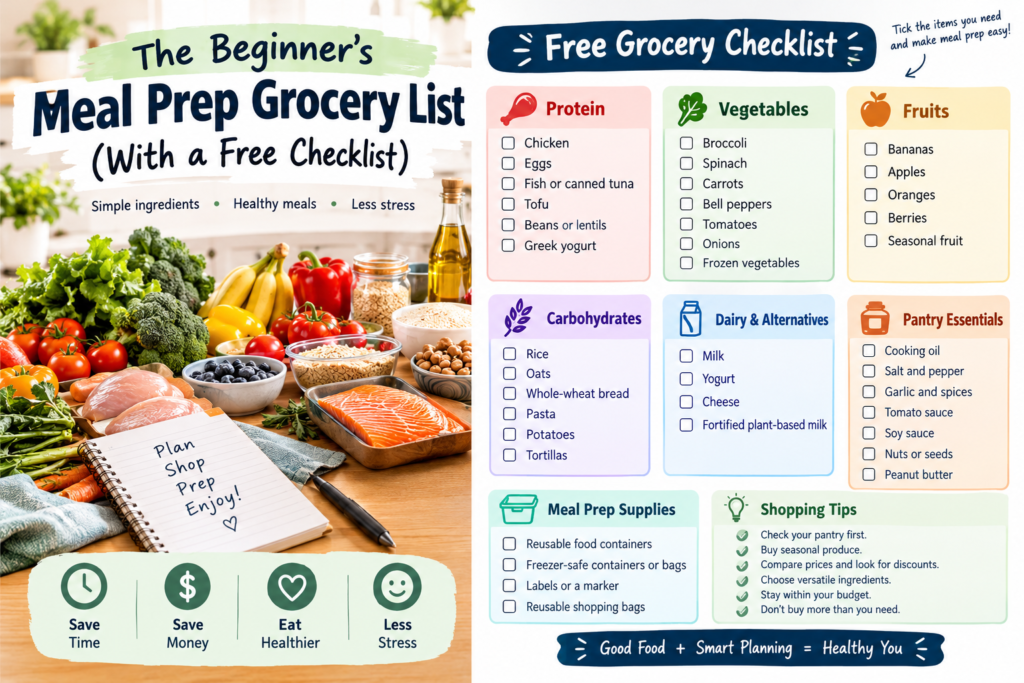
This beginner’s meal prep grocery list will help you choose essential ingredients, plan balanced meals, and shop with confidence. You will also find a free grocery checklist that you can copy, print, or save on your phone for your next shopping trip.
Whether you are preparing meals for one person, feeding a family, or simply trying to stay organized, this guide will help you get started.
Table of Contents
What Is Meal Prep and Why Does It Matter?
Meal prep means planning and preparing some or all of your meals ahead of time. Instead of deciding what to eat every day, you prepare ingredients or complete meals in advance.
For example, you might cook chicken, rice, and vegetables on Sunday and use them to create different lunches throughout the week.
Benefits of Meal Prepping
Saves time: Preparing several meals at once means less cooking and cleaning during busy weekdays.
Helps manage your grocery budget: Planning meals before shopping can prevent unnecessary purchases and reduce food waste.
Makes healthy eating easier: When nutritious ingredients are ready to use, it becomes easier to put together balanced meals.
Reduces daily stress: You spend less time wondering what to cook after a long day.
Improves organization: A weekly grocery list helps you understand exactly what you need before visiting the supermarket.
You do not need to prepare every meal for seven days. Even preparing three lunches or washing and chopping vegetables ahead of time can make a noticeable difference.
How to Create a Beginner’s Meal Prep Grocery List
Before heading to the grocery store, take a few minutes to plan your meals. This simple step can help you avoid buying ingredients you do not need.
Step 1: Choose Your Meals for the Week
Start by selecting three to five meals you would enjoy eating. Keep your first week simple rather than trying a completely different recipe every day.
For example, your weekly plan could include oatmeal for breakfast, chicken and rice for lunch, and vegetable pasta for dinner.
Choose recipes that share ingredients. If you buy spinach for breakfast omelets, you can also add it to salads or pasta.
Step 2: Check Your Kitchen First
Look through your refrigerator, freezer, and pantry before making your grocery list.
You may already have rice, oats, canned beans, cooking oil, or frozen vegetables. Using what you have at home prevents duplicate purchases and helps stretch your budget.
Step 3: Organize Ingredients by Category
Divide your grocery list into categories such as protein, vegetables, fruits, carbohydrates, dairy, and pantry staples.
This makes shopping faster because you can find similar items together.
Step 4: Set a Grocery Budget
Decide how much you want to spend before shopping. Compare prices, check store discounts, and choose seasonal produce when possible.
Frozen fruits and vegetables can also be convenient alternatives to fresh produce, especially when you want to reduce waste.
The Beginner’s Meal Prep Grocery List
The following grocery list covers the basic ingredients you can use to prepare breakfasts, lunches, dinners, and snacks. Adjust the quantities according to your household size, appetite, and weekly meal plan.
1. Protein Sources
Protein helps build and maintain muscles and contributes to a satisfying meal. Including a protein source in your meals can also make meal planning more flexible.
Consider adding these foods to your grocery list:
- Chicken breast or chicken thighs
- Eggs
- Canned tuna or salmon
- Lean beef or turkey
- Tofu or tempeh
- Lentils
- Chickpeas
- Black beans
- Plain Greek yogurt
- Cottage cheese
You do not need to buy every item. Choose two or three protein sources that fit your preferences and budget.
For example, chicken and eggs can be used in several meals, while beans and lentils are affordable plant-based options.
2. Vegetables
Vegetables provide fiber, vitamins, minerals, and variety. Buying a mix of fresh and frozen options can make meal prep easier.
Add some of these vegetables to your list:
- Broccoli
- Spinach
- Carrots
- Bell peppers
- Cucumbers
- Tomatoes
- Onions
- Zucchini
- Green beans
- Lettuce
- Cauliflower
- Frozen mixed vegetables
Choose vegetables that work with multiple recipes. Carrots, onions, and bell peppers, for example, can be added to stir-fries, rice dishes, soups, and salads.
If you have a busy schedule, pre-cut vegetables can save preparation time, although they may cost more.
3. Fruits
Fruit makes a convenient breakfast ingredient or snack. Choose options that you enjoy and can realistically finish before they spoil.
Good choices include:
- Bananas
- Apples
- Oranges
- Berries
- Grapes
- Pears
- Mangoes
- Frozen berries
Bananas and apples are useful everyday options, while frozen berries work well in smoothies, oatmeal, and yogurt bowls.
Buy a combination of fruits with different storage lives so that everything does not need to be eaten immediately.
4. Healthy Carbohydrates and Whole Grains
Carbohydrates provide energy and can form the foundation of many meal prep recipes. Whole grains also provide fiber and other nutrients.
Consider purchasing:
- Brown rice or white rice
- Oats
- Whole-wheat bread
- Whole-wheat pasta
- Quinoa
- Potatoes
- Sweet potatoes
- Whole-wheat tortillas
- Couscous
Rice, potatoes, and pasta are versatile choices for beginners because they pair well with many proteins and vegetables.
You do not need to eliminate carbohydrates to meal prep successfully. The goal is to build balanced meals that suit your needs and preferences.
5. Dairy and Dairy Alternatives
Dairy products and fortified alternatives can provide protein, calcium, and other important nutrients.
Useful options include:
- Milk
- Plain yogurt
- Greek yogurt
- Cheese
- Unsweetened fortified soy milk
- Other suitable fortified plant-based milk
Choose products based on your dietary needs, taste, and budget. If you avoid dairy, check product labels to find appropriate alternatives.
6. Pantry Staples and Seasonings
A few basic pantry items can turn simple ingredients into flavorful meals.
Keep these items on your shopping list when needed:
- Olive oil or another cooking oil
- Salt and black pepper
- Garlic
- Paprika
- Cumin
- Chili powder
- Italian seasoning
- Soy sauce
- Vinegar
- Mustard
- Tomato sauce
- Peanut butter
- Nuts and seeds
You probably will not need to purchase all these items every week. Check your pantry first and replace only what is running low.
Free Beginner’s Meal Prep Grocery Checklist
Use this checklist to organize your next grocery trip. Tick the items you need and leave out anything that does not fit your meal plan.
Protein
- Chicken
- Eggs
- Fish or canned tuna
- Tofu
- Beans or lentils
- Greek yogurt
Vegetables
- Broccoli
- Spinach
- Carrots
- Bell peppers
- Tomatoes
- Onions
- Frozen vegetables
Fruits
- Bananas
- Apples
- Oranges
- Berries
- Seasonal fruit
Carbohydrates
- Rice
- Oats
- Whole-wheat bread
- Pasta
- Potatoes
- Tortillas
Dairy and Alternatives
- Milk
- Yogurt
- Cheese
- Fortified plant-based milk
Pantry Essentials
- Cooking oil
- Salt and pepper
- Garlic and spices
- Tomato sauce
- Soy sauce
- Nuts or seeds
- Peanut butter
Meal Prep Supplies
- Reusable food containers
- Freezer-safe containers or bags
- Labels or a marker
- Reusable shopping bags
Shopping tip: Before checking out, review your list and remove anything you do not need. A focused shopping trip is often more useful than filling your cart with ingredients simply because they look appealing.
How Much Food Should Beginners Buy?
The right quantity depends on how many people you are feeding, how often you eat at home, and how many meals you want to prepare.
For one adult preparing several lunches and dinners, a starting shopping list might include:
| Ingredient | Example quantity |
|---|---|
| Chicken | 1–1.5 pounds |
| Eggs | 6–12 |
| Rice | 1 bag or an existing pantry supply |
| Broccoli | 2 heads or a frozen bag |
| Carrots | 1 bag |
| Bell peppers | 2–3 |
| Bananas | 5–7 |
| Apples | 4–5 |
| Oats | 1 container |
| Yogurt | 1 tub |
These are flexible examples, not exact nutritional requirements. Adjust quantities to match your recipes and appetite, and buy fewer fresh ingredients if you know you will not use them in time.
A Simple One-Week Meal Prep Plan
Once you have your groceries, you can use them to create several meals without cooking something completely different every day.
Breakfast Ideas
Overnight oats: Combine oats, milk, and yogurt in a container. Refrigerate overnight and add fruit before eating.
Egg and vegetable breakfast: Cook eggs with spinach, onions, and bell peppers. Pair with whole-wheat toast.
Yogurt and fruit bowl: Add yogurt, sliced bananas, berries, and a small portion of nuts or seeds.
Lunch Ideas
Chicken and rice bowls: Combine cooked chicken, rice, broccoli, and your favorite seasonings.
Chickpea salad: Mix chickpeas, cucumbers, tomatoes, onions, and a simple dressing.
Tuna wraps: Combine tuna with a suitable dressing and vegetables, then serve in a whole-wheat tortilla.
Dinner Ideas
Vegetable pasta: Prepare whole-wheat pasta with tomato sauce, spinach, and other vegetables.
Chicken and roasted vegetables: Roast chicken and vegetables together, ensuring the chicken reaches a safe internal temperature.
Lentil curry with rice: Cook lentils with onions, tomatoes, garlic, and spices, then serve with rice.
You can rotate these meals throughout the week. For variety, change the sauces, seasonings, or vegetables rather than purchasing a completely new set of ingredients.
How to Meal Prep in One Hour
You do not need an entire afternoon to prepare food for the week. A simple routine can help you finish the main tasks in about an hour, depending on your recipes and equipment.
Step 1: Wash and Prepare Your Ingredients
Wash produce under running water, chop vegetables, and measure out the ingredients you need. Keep raw meat separate from ready-to-eat foods to avoid cross-contamination.
Step 2: Cook Your Main Ingredients
Start cooking rice, potatoes, or another carbohydrate while preparing your protein. Roast vegetables in the oven or cook them on the stovetop.
If you are preparing several dishes, choose recipes that use similar ingredients to reduce the number of pans you need.
Step 3: Portion Your Meals
Divide the cooked food into clean containers. You can combine ingredients in individual meals or store proteins, grains, and vegetables separately.
Separate storage makes it easier to create different combinations throughout the week.
Step 4: Store Food Safely
Refrigerate perishable food promptly, ideally within two hours of cooking, or within one hour when the temperature is above 90°F (32°C).
Most cooked leftovers should be refrigerated at 40°F (4°C) or below and eaten within three to four days. Freeze portions that you plan to keep longer. Reheat leftovers to 165°F (74°C).
Do not leave cooked meals at room temperature for extended periods. When in doubt, follow official food-safety guidance and discard food that has been stored unsafely.
Helpful Resources for Meal Planning
Planning balanced meals becomes easier when you use reliable nutrition and food safety resources. The USDA’s MyPlate healthy eating guidance can help you understand how to include different food groups in your meals. For storing prepared meals safely, check the FoodSafety.gov cold food storage charts. These resources can help you make informed decisions while creating your weekly meal prep grocery list.
Tips for Saving Money on Your Meal Prep Grocery List
Meal prep can fit a range of budgets if you shop strategically.
- Plan meals around affordable ingredients: Rice, oats, eggs, beans, and lentils can form the basis of many inexpensive meals.
- Buy seasonal produce: Seasonal fruits and vegetables may be cheaper and easier to find.
- Use frozen ingredients: Frozen vegetables and fruits are convenient and can help reduce spoilage.
- Compare unit prices: Look at the cost per pound, kilogram, or serving rather than the package price alone.
- Repurpose leftovers: Use leftover roasted vegetables in omelets, wraps, soups, or grain bowls.
- Avoid unnecessary specialty products: You do not need expensive powders, sauces, or containers to begin meal prepping.
- Make a weekly inventory: Check what is already in your kitchen before shopping.
The most effective grocery list is not necessarily the longest one. It is the one that helps you prepare meals you enjoy while staying within your budget.
Frequently Asked Questions
What groceries should a beginner buy for meal prep?
Start with a few protein sources, vegetables, fruits, carbohydrates, and basic seasonings. Chicken, eggs, beans, rice, oats, broccoli, carrots, bananas, and yogurt are useful starting options. Choose foods that fit your preferences and planned recipes.
How much should I spend on meal prep groceries?
Your grocery budget depends on your location, household size, food preferences, and local prices. To control spending, plan your meals first, compare prices, use pantry staples, and avoid buying ingredients you will not use.
How many days in advance can I meal prep?
Most cooked leftovers can be refrigerated for three to four days when stored properly. If you prepare food for later in the week, freeze the extra portions and thaw them safely when needed.
Is meal prepping good for weight management?
Meal prepping can help you plan portions, include a variety of nutritious foods, and reduce reliance on unplanned convenience meals. However, weight management depends on many factors, and meal prep itself does not guarantee a particular result.
Do I need special containers for meal prep?
No. Clean, food-safe containers with secure lids are sufficient. Choose containers that are suitable for refrigeration or freezing, and check whether they are microwave-safe before reheating food in them.
Can I meal prep without cooking every meal?
Yes. You can prepare ingredients instead of complete meals. Washing fruit, chopping vegetables, cooking grains, portioning snacks, and preparing sauces in advance can save time without requiring every meal to be cooked ahead.
Final Thoughts
Starting meal prep does not require an expensive grocery haul, complicated recipes, or hours in the kitchen. The key is to choose a few versatile ingredients, plan meals you genuinely enjoy, and shop with a clear list.
Use this beginner’s meal prep grocery list to organize your shopping, reduce food waste, and make your weekly routine easier. Start with a few breakfasts and lunches, learn which ingredients work best for you, and gradually build a routine that fits your lifestyle.
Save or print the free checklist before your next grocery trip. With a little preparation, you can make meal planning simpler, more affordable, and easier to maintain week after week.