
Most cooked meal prep dishes last about three to four days in the refrigerator when stored properly at 40 degrees Fahrenheit or below, according to food safety guidance from the USDA Food Safety and Inspection Service. That is the short answer.How Long Does Meal Prep Last in the Fridge
Table of Contents
The Three to Four Day Rule, Explained
The three to four day guideline applies to most cooked leftovers, including grain bowls, soups, cooked vegetables, and cooked meat or poultry, when the refrigerator stays at 40 degrees Fahrenheit or below. This is a food safety guideline, not a guarantee of peak quality.How Long Does Meal Prep Last in the Fridge
A dish can be technically safe to eat on day four while tasting noticeably less fresh than it did on day one. Understanding the difference between safety and quality helps you make better decisions about what to eat and what to toss.How Long Does Meal Prep Last in the Fridge
Refrigerator Temperature Matters More Than Most People Think
Keeping your refrigerator at or below 40 degrees Fahrenheit is the foundation of safe meal prep storage. A refrigerator thermometer, which costs very little, is the most reliable way to confirm your fridge is actually holding that temperature, since the dial settings on many refrigerators do not always match the actual internal temperature.
Cooling Food Safely Before Storage
Food should go into the refrigerator within two hours of cooking, or within one hour if the room temperature is above 90 degrees Fahrenheit. This matters because bacteria multiply quickly in what food safety experts call the danger zone, the range between 40 and 140 degrees Fahrenheit. For large batches of soup, chili, or rice, dividing food into shallow containers, generally no more than two inches deep, helps it cool faster and more evenly than leaving it in one large pot.
Food Storage Table

| Food Type | General Refrigerator Guidance | Storage Notes |
| Cooked grains, such as rice or quinoa | 4 to 6 days | Cool completely before sealing |
| Cooked beans or lentils | 3 to 4 days | Store in liquid to retain moisture |
| Cooked vegetables | 3 to 4 days | Texture softens over time |
| Soups and stews | 3 to 4 days | Freezes well for longer storage |
| Cooked meat or poultry | 3 to 4 days | Reheat to 165 degrees Fahrenheit |
| Hard boiled eggs | 1 week | Keep shells on until ready to eat |
| Cut fruits and vegetables | 3 to 5 days | Store in airtight containers |
This table reflects general guidance. Always check for visible signs of spoilage before eating, regardless of how many days have passed.
Storage Containers and Labeling
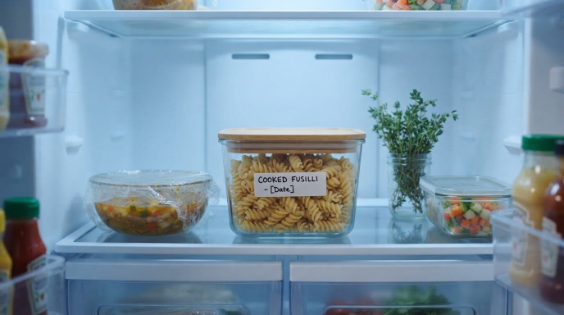
Airtight, leak proof containers do more than keep your fridge tidy. They limit air exposure, which slows both spoilage and the transfer of odors between dishes. Labeling containers with the date they were cooked removes the guesswork later in the week, especially if you tend to prep several dishes at once. A simple strip of masking tape and a marker is enough. Glass containers are reusable and do not stain or absorb smells the way some plastics can over time.How Long Does Meal Prep Last in the Fridge
Common Meal Prep Foods and How They Hold Up
Grain based dishes like rice and quinoa tend to hold their texture reasonably well through the recommended storage window. Leafy greens and delicate herbs wilt faster and are best added fresh rather than stored pre mixed into a dish. Sauces and dressings generally last longer than the dishes they accompany, which is one reason storing them separately extends the usable life of a meal. Proteins such as cooked chicken, tofu, or beans generally follow the standard three to four day guideline.How Long Does Meal Prep Last in the Fridge
When Freezing Is a Better Option
If you know you will not eat a dish within three to four days, freezing is usually the safer choice rather than pushing the limits of refrigerator storage. Most cooked meals, including soups, stews, and grain based dishes, freeze reasonably well for one to three months without major quality loss, according to USDA guidance on freezing and food safety. Foods with a high water content, such as lettuce or cucumber, do not freeze well and are better eaten fresh.How Long Does Meal Prep Last in the Fridge
Reheating Considerations
Reheated leftovers should reach an internal temperature of 165 degrees Fahrenheit to help reduce the risk of foodborne illness. When using a microwave, stirring food partway through heating helps eliminate cold spots where bacteria can survive. Only reheat the portion you plan to eat, since repeated reheating and cooling of the same container increases risk over time.How Long Does Meal Prep Last in the Fridge
Common Food Storage Mistakes
Packing food while it is still steaming hot traps moisture and heat inside the container, which can promote condensation and bacterial growth. Storing everything in one large container rather than individual portions means the whole batch is exposed to air and temperature changes every time you open it. Ignoring your refrigerator’s actual temperature, rather than just trusting the dial, is another common oversight that can quietly shorten how long food stays safe.How Long Does Meal Prep Last in the Fridge
Signs Meal Prep Should Not Be Eaten
An off smell, a slimy texture, visible mold, or a noticeably sour taste are all signs that a dish should be discarded rather than eaten. When in doubt about whether food is still safe, the safest choice is to throw it out rather than take a chance, since some bacteria that cause foodborne illness do not always produce obvious warning signs.
How to Organize a Meal Prep Fridge
Store raw ingredients, if any remain, on lower shelves, below fully cooked meal prep containers, to prevent any drips from contaminating ready to eat food. Group containers by the day you plan to eat them, placing the oldest dishes toward the front so they get used first. Keeping your fridge from being overly packed also allows cold air to circulate properly, which helps maintain a consistent temperature throughout.
Real Life Example: A Meal Prep Fridge Gone Wrong and How to Fix It

Consider a common scenario. Someone cooks a large batch of chicken and rice on Sunday, packs it while still warm into one oversized container, and places it toward the back of a fairly full fridge. By Thursday, the dish smells slightly off, despite being within the general three to four day window, because the food took too long to cool fully and the fridge itself was running warmer than the dial suggested. The lesson here, supported by USDA food safety guidance, is that the three to four day rule assumes food was cooled quickly and stored at a consistent 40 degrees Fahrenheit or below. When either of those conditions is not met, food can spoil faster than the general guideline suggests. Readers can apply this by dividing large batches into smaller containers, checking their fridge temperature with a thermometer, and trusting their senses if something seems off, even within the expected storage window.
FAQs
How long does meal prep last in the fridge? Most cooked meal prep dishes last three to four days in the refrigerator when stored at 40 degrees Fahrenheit or below, though this varies by food type and how it was cooled and stored.
Can I eat meal prep on day five? It depends on the food and how it was stored. Many dishes are no longer considered safe by day five under standard refrigeration, so freezing is a better option if you will not finish a dish within four days.
Does meal prep last longer in the freezer? Yes. Most cooked meals freeze safely for one to three months without major quality loss, which makes freezing a practical option for meal prep you cannot finish within the fridge storage window.
How can I tell if my meal prep has gone bad? Look for an off smell, sliminess, visible mold, or a sour taste. If a dish shows any of these signs, it should be thrown out rather than eaten.
Should I refrigerate meal prep while it is still hot? No. Let food cool briefly, then refrigerate it within two hours of cooking. Dividing large batches into shallow containers speeds up safe cooling.
Is it safe to reheat meal prep more than once? Repeated reheating and cooling increases risk. It is safer to portion meals into individual servings and reheat only what you plan to eat at one time.
Conclusion
Knowing how long meal prep lasts in the fridge comes down to a few consistent habits: cooling food quickly, storing it at 40 degrees Fahrenheit or below, using airtight containers, and labeling everything with the date it was cooked. Most cooked dishes are good for three to four days, with freezing as a reliable backup for anything you will not finish in time.
Keep a refrigerator thermometer on hand, trust your senses when something seems off, and your meal prep routine will stay both safe and enjoyable. For complete storage guidance, the FoodSafety.gov cold storage chart is a useful reference to keep bookmarked.
Pingback: Easy Vegetarian Meal Prep Ideas for the Week (9 Recipes)