
Rice is one of those staples I almost always cook more of than I need, mostly on purpose, because knowing how to freeze cooked rice properly means future me gets a fast side dish without starting from scratch. It took some trial and error to figure out how to freeze cooked rice without ending up with a clumpy, dried out block, so here is the method that has worked best for me, along with the food safety details that actually matter.
Can You Freeze Cooked Rice
Yes, cooked rice freezes well, and it is one of the most practical ways to reduce food waste and save time on busy weeknights. The key is handling it correctly from the moment it finishes cooking until the moment you reheat it.
Why Food Safety Matters Here
Rice carries a natural risk that many other leftovers do not: a heat resistant bacterium called Bacillus cereus can survive cooking, and if rice sits at room temperature too long, it can multiply to unsafe levels. According to USDA guidance on leftovers and food safety, cooked food should not sit out for more than two hours, or one hour if the room is above ninety degrees Fahrenheit.
This is why the cooling step before freezing matters just as much as the freezing itself.
How to Cool Rice Properly Before Freezing
Spread the rice in a thin, even layer on a baking sheet or in a wide shallow container as soon as it is done cooking. This increases the surface area and helps it cool quickly instead of staying in the temperature danger zone for too long. Avoid leaving a deep pot of hot rice on the counter, since the center will stay warm far longer than you would expect. Also read Simple Meal Prep Rice and Chicken Recipes for Every Day of the Week.
Best Containers for Freezing Rice
Freezer safe bags with the air pressed out, or shallow airtight containers, both work well. Bags are especially good because you can flatten them into thin, even layers that freeze and thaw faster. Whatever you choose, following cold food storage guidance on using airtight, moisture proof packaging will help prevent freezer burn.
Portioning Rice for Easy Use
Freeze rice in individual or meal sized portions rather than one large block. This means you only thaw what you need, and it also helps the rice cool and freeze faster in the first place. A cup or two per bag is a practical amount for most single meals.
Preventing Freezer Burn
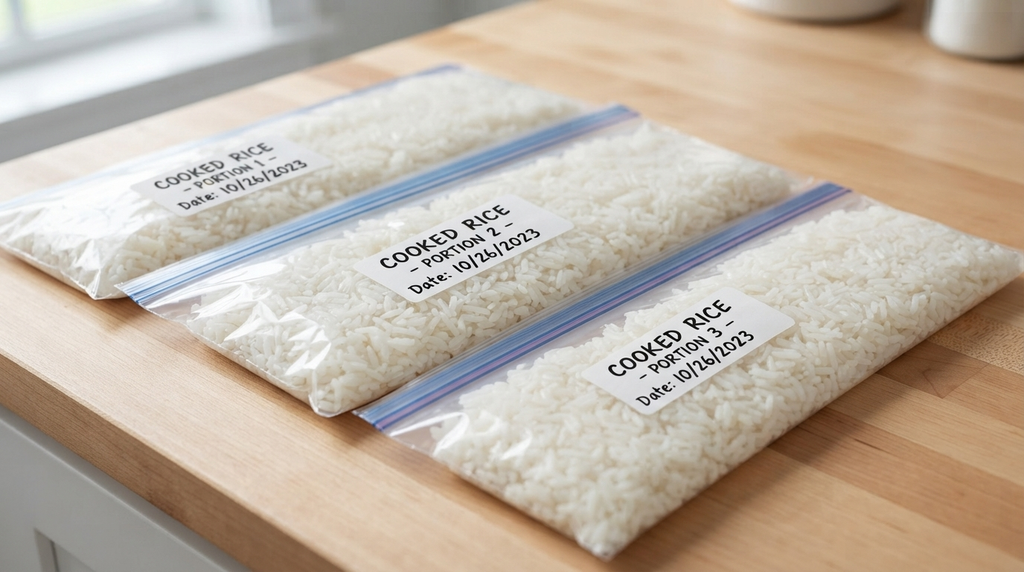
Freezer burn happens when air reaches the surface of frozen food and dries it out, leaving grayish, tough patches. Pressing out as much air as possible before sealing, using freezer specific bags rather than regular storage bags, and avoiding a freezer that is overstuffed with poor air circulation all help keep rice tasting fresh.
How Long Frozen Rice Lasts
Frozen cooked rice keeps well for about one to two months at peak quality, though it remains safe well beyond that if kept consistently frozen. Quality, not safety, is usually the limiting factor.
How to Thaw and Reheat Frozen Rice
Microwave Method
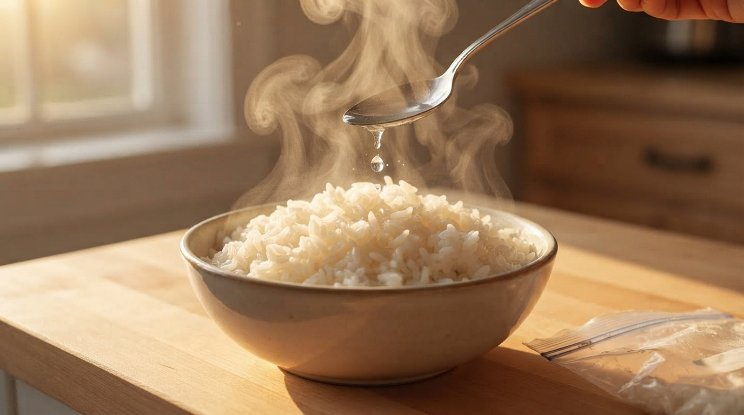
Add a splash of water to the frozen rice, cover loosely, and microwave in short bursts, fluffing with a fork between intervals. The added moisture helps restore the fluffy texture that freezing can flatten out.
Stovetop Method
Add the frozen rice to a pan with a small amount of water or broth, cover, and heat over low to medium heat, stirring occasionally until it is heated through and the grains separate again.
Either method works, but reheating rice to a full simmer or a steaming hot temperature throughout, rather than just warm, is important for food safety.
Storage and Reheating Table
| Storage Method | Expected Quality | Best Use |
| Freezer bag, flattened | Good texture, fast thaw | Weeknight meals, quick reheating |
| Shallow airtight container | Good texture, slightly slower thaw | Meal prep portions |
| Deep container | Uneven freezing, more freezer burn risk | Not recommended |
| Microwave reheat with water | Fluffy texture restored | Fast single servings |
| Stovetop reheat with broth | Fluffy texture, added flavor | Larger batches |
Common Mistakes
Freezing rice while it is still warm, skipping the portioning step and freezing one large clump, forgetting to add moisture back in during reheating, and reheating rice only until it is lukewarm instead of fully hot are the most common issues I see people run into.
Real Life Example
A chef quoted in a Chowhound article on storing leftover rice pointed out that one of the biggest mistakes home cooks make is covering rice before it has properly cooled, which traps heat and moisture and slows the cooling process right when speed matters most. That single tip changed how I handle rice on busy cooking days, since I now leave containers uncovered on the counter just long enough for the steam to stop before sealing them up.
Signs Rice Should Not Be Eaten
If thawed rice smells sour, looks slimy, or has any discoloration, discard it. When in doubt, the safest choice is always to throw it out rather than risk it.
Frequently Asked Questions
How do you freeze cooked rice so it stays fluffy?
Cool it quickly in a thin layer, portion it into airtight bags with the air pressed out, and reheat with a splash of added liquid to restore moisture.
Can you refreeze rice after thawing it?
It is best avoided. Once thawed and reheated, rice should be eaten rather than refrozen, since repeated temperature changes increase food safety risk.
How long can cooked rice sit out before it needs to be refrigerated or frozen?
No more than two hours at room temperature, or one hour in very warm conditions.
Does freezing rice affect its texture?
It can make rice slightly firmer, but adding moisture during reheating restores most of the original fluffiness.
Can you freeze fried rice the same way as plain rice?
Yes, the same cooling, portioning, and freezing principles apply, though fried rice with vegetables or meat may have a slightly shorter quality window in the freezer.
Conclusion
Knowing how to freeze cooked rice properly comes down to cooling it quickly, portioning it well, storing it in airtight, moisture proof containers, and reheating it with a bit of added liquid. Handled this way, frozen rice comes out just as fluffy as the day you made it, and you get a genuinely useful shortcut for busy meals without compromising on safety or texture.