
Most meal prep advice assumes a full kitchen: an oven, a stovetop, a spacious fridge, and enough counter space to spread out five containers at once. For students living in a dorm room or a shared house with one shelf of fridge space and a microwave balanced on a desk, that advice is basically useless.
Meal prep for students needs a different starting point. It has to work around small fridges, little or no cooking equipment, tight budgets, and a schedule that changes every single day depending on classes. The good news is that meal prep is still entirely possible in these conditions, it just looks different from the version aimed at people with a full kitchen.
Why Meal Prep Actually Helps Students
Between classes, assignments, and part time work, cooking from scratch every single day is rarely realistic. Meal prep means grabbing something already made instead of skipping meals or defaulting to expensive takeout. It also protects a tight budget, since cooking in batches is almost always cheaper than eating out meal by meal, and it reduces the daily mental load of figuring out what to eat during an already busy week.
Basic Equipment for Student Meal Prep
You do not need much to get started. A microwave, a mini fridge, a few stackable containers, a sharp knife, and a cutting board cover most of what is realistic in a dorm setting. If you have access to a shared kitchen, a single pot and a nonstick pan open up a lot more options. An electric kettle is also genuinely useful for oatmeal, instant noodles, and hot drinks without needing a stove at all.
No Oven Meal Prep Ideas
Overnight oats, no cook wraps, bean and grain bowls made with microwaveable rice pouches, peanut butter and banana sandwiches, and cold pasta salad all come together without ever needing an oven. Most of these rely on ingredients that are already cooked or require no cooking at all, just assembly.
Microwave Friendly Meals
Microwave friendly staples include instant rice or quinoa pouches topped with canned beans and vegetables, microwaveable baked potatoes topped with cheese and canned chili, scrambled eggs made in a microwave safe mug, and frozen vegetable stir fry mixes heated with a splash of soy sauce. These meals go from fridge or pantry to plate in a few minutes with almost no cleanup.
Mini Fridge Friendly Foods
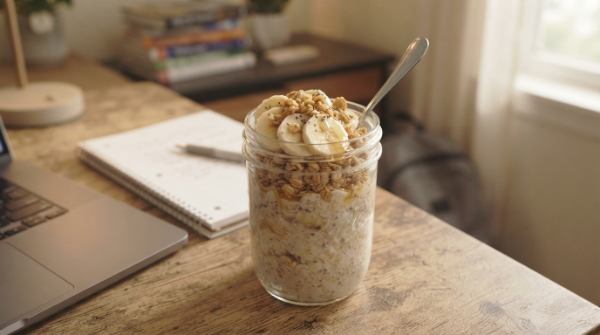
Space is the biggest constraint in a mini fridge, so prioritize foods that store well in a small footprint: yogurt cups, hard boiled eggs, pre washed baby carrots, hummus, cheese sticks, and stackable containers of pre portioned meals. Foods that do not need refrigeration at all, like peanut butter, canned tuna, granola bars, and shelf stable milk, free up fridge space for what actually needs to stay cold.
Breakfast, Lunch, and Dinner Ideas for Students
Breakfast: overnight oats made in a mason jar the night before, yogurt parfaits layered with granola and fruit, or microwave egg mugs.
Lunch: grain bowls with microwaveable rice, canned beans, and pre chopped vegetables, wraps made with hummus and deli meat or roasted vegetables, or simple pasta salad made ahead and kept cold.
Dinner: one pan stir fries using a hot plate if allowed, microwaveable rice bowls topped with rotisserie chicken and frozen vegetables, or quesadillas made in a small nonstick pan if a stove is available.
Affordable Snacks and High Protein Options
Cheap, filling snacks include popcorn, peanut butter on whole grain crackers, trail mix made from bulk bin nuts and dried fruit, and fruit that travels well like apples and bananas. For protein without needing much equipment, canned tuna or salmon, Greek yogurt, cottage cheese, eggs, canned beans, and protein powder mixed into oats all work well on a student budget.
Vegetarian Meal Prep for Students
Beans, lentils, tofu, eggs, and cheese provide protein without needing meat, and they tend to be some of the more affordable items in a grocery store. A simple vegetarian bowl of rice, black beans, corn, and salsa costs very little per serving and reheats easily in a microwave.
Quick Meals for Busy Class Days
On days packed with back to back classes, grab and go options matter most. Pre portioned containers that need zero prep, like a wrap already made the night before or a jar of overnight oats, save time exactly when there is none to spare between classes.
Shopping on a Student Budget
Buying in bulk where storage allows, choosing store brand staples over name brands, planning meals around what is on sale, and sticking to a written list to avoid impulse buys all stretch a limited grocery budget further. According to MyPlate, which offers tip sheets on preparing budget friendly foods, finding savings and discovering new ways to prepare food within a budget is a practical way to build sustainable healthy eating habit.
Avoiding Food Waste in a Small Space
Buy only what you can realistically store and use, freeze portions you will not eat within a few days, and use flexible ingredients like rice, beans, and frozen vegetables that do not spoil quickly. Rotating older groceries to the front of a small fridge helps make sure nothing gets forgotten behind newer purchases.
Storing Meals Safely in a Shared or Small Fridge
Even with limited space, food safety basics do not change. The refrigerator should be kept at 40°F or below, and the freezer at 0°F or below, with perishable food refrigerated within two hours of cookin. In a shared fridge, labeling containers with your name and the date helps you keep track of what is still safe to eat, and stacking containers instead of leaving loose food reduces spoilage from being pushed to the back and forgotten.
Student Meal, Equipment, Difficulty, and Storage
| Meal Idea | Equipment Needed | Prep Difficulty | Storage Approach |
| Overnight oats | Jar or container, fridge | Very easy | Fridge, up to four days |
| Microwave rice and bean bowl | Microwave, fridge | Easy | Fridge, up to four days |
| Egg mug scramble | Microwave, mug | Very easy | Best made fresh, eggs from fridge |
| No cook wrap | Cutting board, knife | Easy | Fridge, one to two days |
| Cold pasta salad | Stove or hot water, fridge | Moderate | Fridge, up to four days |
| Yogurt parfait | Fridge, container | Very easy | Fridge, two to three days |
| Frozen stir fry bowl | Microwave or hot plate | Easy | Fridge or freezer |
A Simple Weekly Student Meal Prep Plan
Sunday, batch cook a pot of rice or grain if a stove is available, and hard boil a dozen eggs. Monday through Thursday, rotate between grain bowls, wraps, and yogurt parfaits depending on the day’s schedule. Friday, use up whatever produce or leftovers are close to expiring in one final combined meal, so nothing goes to waste heading into the weekend.
Real Life Example
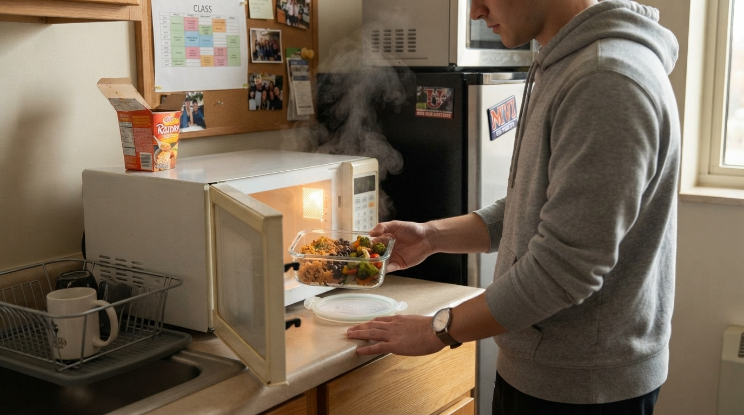
Picture a student with one shelf in a shared mini fridge, a microwave, and an electric kettle. On Sunday evening, they hard boil six eggs, cook a batch of instant rice, and portion out four containers with rice, canned black beans, and frozen corn. Through the week, each container gets microwaved for lunch between classes, topped with hot sauce or salsa kept in a dorm room drawer. No stove, no oven, and no wasted money on daily takeout, just a repeatable system built around the equipment actually available.
Conclusion
Meal prep for students does not require a full kitchen, a big grocery budget, or hours of free time. It requires a handful of low equipment recipes, a mini fridge used wisely, and a little planning at the start of the week. Once the system is in place, it becomes one less thing to think about during an already packed schedule, and one more way to eat well without spending money you do not have.
For more ideas that fit a similarly busy schedule, see Easy Work Breakfast Suggestions with Fast Morning Ideas for Busy People and Fast and Healthy Quick Lunch Ideas for Busy People at Home, both of which translate well into a dorm setting with a little adjustment.
FAQs
Can I meal prep without a stove or oven? Yes, plenty of meal prep works entirely around a microwave and a mini fridge, including overnight oats, no cook wraps, microwaveable rice and bean bowls, and yogurt parfaits.
What should I keep in a small dorm fridge for meal prep? Prioritize items that need refrigeration and spoil quickly, like yogurt, eggs, hummus, and pre portioned meals, while keeping shelf stable items such as peanut butter and canned goods outside the fridge to save space.
How can students meal prep on a tight budget? Buy staples like rice, beans, and frozen vegetables in bulk where storage allows, choose store brands, shop with a list, and plan meals around what is already on sale.
Is meal prep safe in a shared fridge? Yes, as long as the fridge stays at 40°F or below and containers are labeled and dated, meal prepped food is just as safe in a shared fridge as in a private one.
What are good high protein meal prep options for students without much equipment? Canned tuna or salmon, Greek yogurt, eggs, cottage cheese, and canned beans all provide protein without needing a stove or oven.
How long can student meal prep meals stay in the fridge? Most prepped meals with cooked ingredients stay safe for about three to four days in the fridge when stored at the correct temperature.
What is an easy first meal prep recipe for a student new to cooking? Overnight oats are a good starting point, since they require no cooking, just mixing oats, milk, and toppings in a jar and letting them sit in the fridge overnight.