
Snacking is usually the part of meal prep that gets skipped. Most of us plan dinners, maybe lunches, and then leave snacks to chance, which is exactly how a bag of chips ends up being the three o’clock decision on a Tuesday.
Meal prep snacks for the week solve that problem in a very ordinary way: you spend twenty or thirty minutes once, and the rest of the week you simply open the fridge and grab something that already fits what your body actually needs.
I think of snack prep as the smaller, less glamorous cousin of full meal prep, but it might be the habit that saves the most time and money day to day. Once a few containers of cut vegetables, portioned nuts, or yogurt cups are sitting ready in the fridge, the temptation to order something or buy a packaged snack drops fast, mostly because the homemade option is now just as convenient.
This guide focuses only on snacks you can prepare ahead of time and pull out through the week, with combinations that actually keep you full rather than a long list of random foods thrown together.
Why Homemade Meal Prep Snacks Work Better Than Packaged Ones
Packaged snacks are convenient, but that convenience often comes with more added sugar, more sodium, and portions that are easy to overeat. According to the Academy of Nutrition and Dietetics, snacking works best when foods are planned and portioned ahead of time, which is really the whole idea behind meal prep snacks.
Homemade snacks give you control over three things packaged food rarely does well: the ingredients, the portion size, and the balance between protein, fiber, and carbohydrates. A snack built from real food and portioned into a container in advance tends to keep you satisfied for longer than a bag of crackers eaten straight from the box.
Building Snack Combinations That Actually Keep You Full
A snack that is only carbohydrates, like crackers alone or pretzels alone, tends to leave you hungry again within an hour. The more reliable approach is pairing a protein or fat source with a fiber source. Apple slices with peanut butter, carrots with hummus, or cottage cheese with berries all follow this same simple rule.
Here are the snack categories worth building your week around.
High Protein Meal Prep Snacks
- Hard boiled eggs, peeled or unpeeled, portioned two per container
- Cottage cheese cups with pineapple or berries
- Turkey or chicken roll ups with a slice of cheese
- Edamame, steamed and salted lightly, portioned into small containers
- Greek yogurt with a spoon of nut butter mixed in
Fruit Based Snack Options
Cut fruit loses some appeal after a day or two in the fridge, so timing matters here. Apples, oranges, and grapes hold up well when washed and portioned in advance. Softer fruits like berries or melon are best cut closer to when you plan to eat them, ideally within two to three days.
Vegetable and Dip Combinations
Carrots, cucumber, bell pepper strips, and snap peas all hold their crunch for several days when stored properly. Pair them with hummus, guacamole, or a yogurt based dip portioned into small containers so the vegetables do not sit in liquid.
Yogurt Based Snacks
Plain Greek yogurt with fruit, a drizzle of honey, and a scoop of granola makes a snack that feels closer to dessert while still delivering protein. Layer these in small jars if you want something that looks appealing enough to bring to the office.
Energy Bites and Oat Based Snacks
No bake energy bites made from oats, nut butter, honey, and a small amount of mini chocolate chips or dried fruit are one of the most reliable meal prep snacks because they store well in both the fridge and the freezer. A basic batch takes about fifteen minutes and lasts the entire week.
Egg Based Snack Options
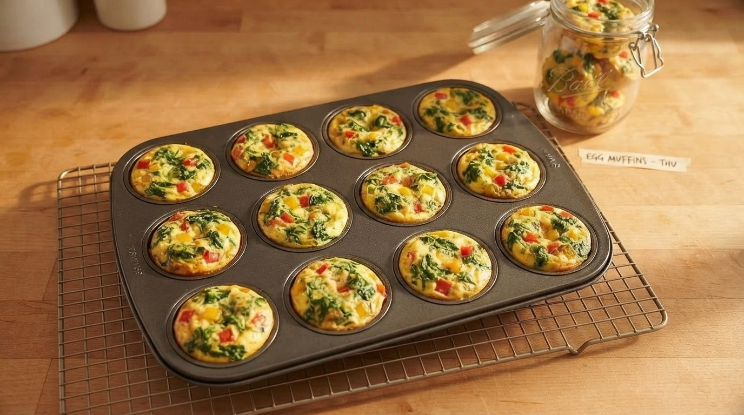
Mini frittatas or egg muffins made in a standard muffin tin are worth the extra prep time on a Sunday. They reheat quickly, hold protein well, and double as a light breakfast if your mornings are rushed. If you are also planning breakfasts for the week, our guide on easy work breakfast suggestions covers more ideas that overlap nicely with egg based snacks.
Portable Snacks for Work or School
Trail mix made from nuts, seeds, and a small amount of dried fruit travels well without refrigeration for a few hours. Portioned into small bags or reusable containers, it is one of the easiest snacks to keep in a desk drawer or backpack for the days when you forget to pack something fresh.
Sweet and Savory Snack Boxes
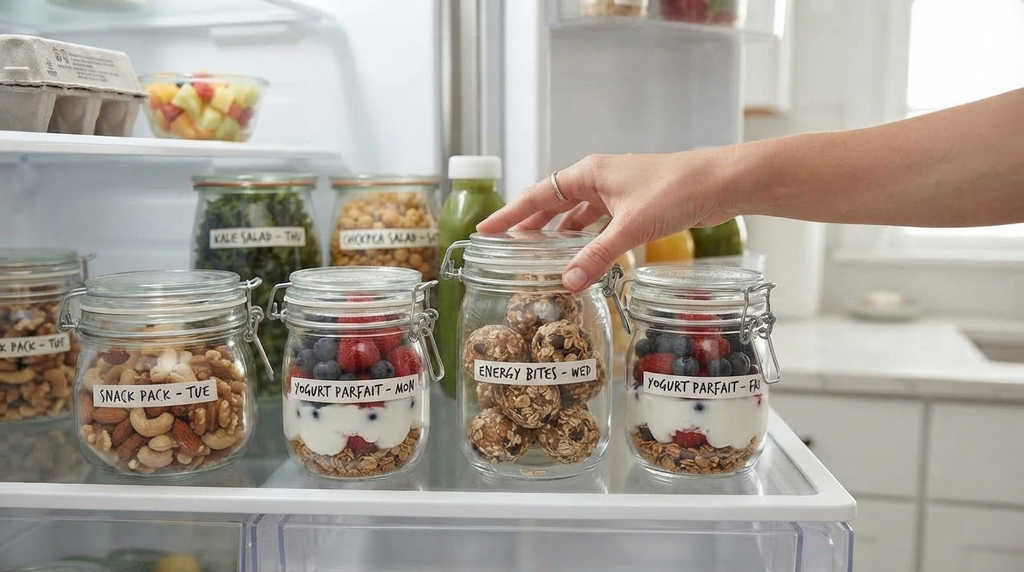
A snack box that mixes something sweet and something savory tends to satisfy cravings better than one note snacks. A simple combination might include a few cheese cubes, a handful of grapes, a few whole grain crackers, and a small square of dark chocolate, all portioned into one compartmentalized container.
How to Portion Snacks for the Week
Pick one day, usually a weekend afternoon, and batch everything at once. Use small containers or silicone dividers so each snack is grabbed as a single unit rather than something you have to measure out every time. For most adults, keeping individual snacks around 200 to 300 calories is a reasonable target, which lines up with general guidance shared by the Academy of Nutrition and Dietetics.
Label containers with the day you prepared them if you are making several types at once. This small step prevents the common mistake of eating the oldest snack last instead of first. Also read Freezer Meal Prep Recipes for Busy Weeknights.
How to Store Prepared Snacks Properly
Storage approach depends heavily on the snack type. Cut vegetables and fruit need to go straight into the refrigerator in airtight containers. Energy bites and baked oat snacks can sit in the fridge for the week or be frozen in batches for longer storage.
Dry snacks like trail mix or roasted chickpeas can stay in a pantry as long as they are sealed. For general safe handling of perishable prepared foods, the Cold Food Storage Chart from FoodSafety.gov is a reliable reference to check against.
| Snack Type | Preparation Effort | Storage Approach | Best Use |
| Hard boiled eggs | Low | Refrigerate, use within about a week | Quick protein boost |
| Cut vegetables with dip | Low | Refrigerate, vegetables 4 to 5 days, dip separate | Afternoon crunch snack |
| Energy bites | Medium | Refrigerate or freeze in batches | Grab and go, sweet craving |
| Yogurt parfait jars | Low | Refrigerate, best within 3 days | Breakfast or midday snack |
| Egg muffins | Medium | Refrigerate 3 to 4 days, or freeze | Portable protein snack |
| Trail mix | Low | Pantry, sealed container | Desk drawer or bag snack |
| Cut fruit | Low | Refrigerate, best within 2 to 3 days | Sweet, fiber rich snack |
Which Snacks Should Be Refrigerated and Which Can Be Frozen
Anything with dairy, cut produce, or eggs needs refrigeration and should not sit at room temperature for more than about two hours. Energy bites, muffins, and cooked oat based snacks freeze well, which makes them a good option if you prefer prepping two weeks at a time instead of one. Simply move a few days worth from the freezer to the fridge as you need them.
Keeping Snacks Fresh and Appealing All Week
The biggest reason people abandon snack prep is boredom, not lack of time. Rotating two or three snack types each week, rather than making the exact same thing every time, keeps things interesting. Storing snacks in clear containers at eye level in the fridge also helps, since you are far more likely to reach for something you can actually see.
Practical Example
Picture a Sunday afternoon where you boil six eggs, wash and cut a bag of carrots and cucumbers, portion hummus into small containers, and mix up one batch of oat and peanut butter energy bites. That single session, roughly forty minutes from start to finish, covers five days of snacks for one person without a single trip to a vending machine or convenience store during the week.
Conclusion
Meal prep snacks for the week are less about following a strict plan and more about giving yourself a few good options that are already ready. Once you build a rotation of high protein, fruit based, and vegetable based snacks, the daily decision of what to eat between meals mostly disappears. Pair this habit with your regular lunch and dinner prep, such as ideas from our fast and healthy quick lunch guide, and the whole week of eating starts to feel far more manageable.
Frequently Asked Questions
How many meal prep snacks should I make for one week?
Most people do well with two or three different snack types prepared in batches, giving enough variety across five to seven days without excessive prep time.
Do meal prep snacks need to be refrigerated the whole time?
Any snack containing dairy, eggs, or cut produce should stay refrigerated and be eaten within a few days. Dry snacks like trail mix or roasted chickpeas can be stored at room temperature in a sealed container.
Can I freeze meal prep snacks instead of refrigerating them?
Yes, energy bites, muffins, and baked oat snacks generally freeze well. Move a portion to the fridge a day before you plan to eat it.
What are good high protein meal prep snacks for weight management?
Hard boiled eggs, Greek yogurt, cottage cheese, and edamame are commonly recommended because they combine protein with relatively few calories per serving.
How long do cut vegetables last as meal prep snacks?
Firmer vegetables like carrots, peppers, and celery typically hold up well for about 4 to 5 days when stored in an airtight container in the refrigerator.
What snacks work best for kids in packed lunches?
Simple combinations like cheese cubes with crackers, apple slices with a small nut butter cup, or yogurt tubes travel well and require little assembly in the morning.
Are meal prep snacks cheaper than buying packaged snacks?
Generally yes, since buying ingredients like eggs, oats, yogurt, and produce in bulk and portioning them yourself usually costs less per serving than individually packaged snack products.