
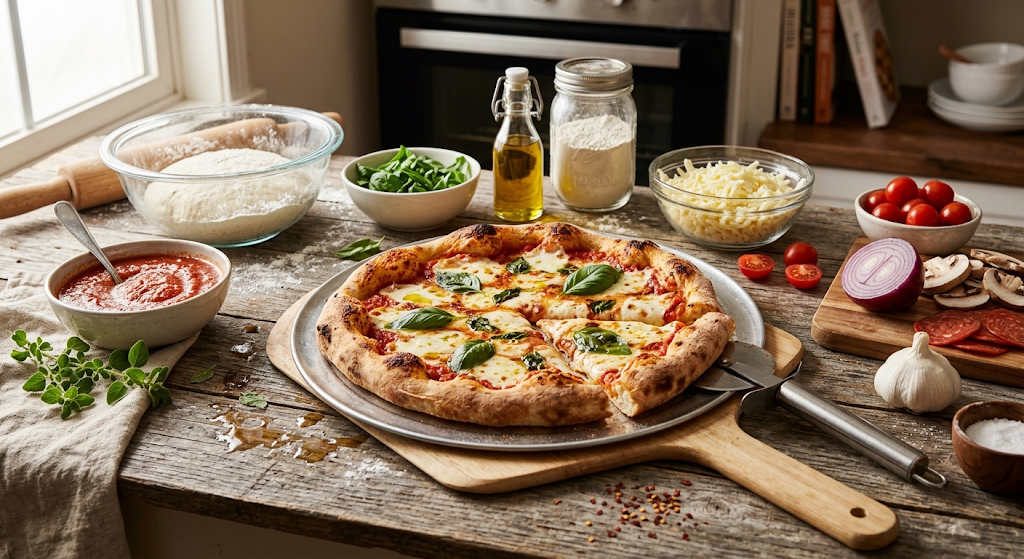
Table of Contents
A Simple Step-by-Step Guide
Making pizza at home is easier than many people think. You do not need a professional pizza oven, expensive equipment, or years of cooking experience to prepare a delicious pizza. With a few basic ingredients, a little preparation, and the right baking method, you can make a homemade pizza with a golden crust, melted cheese, and your favourite toppings.
This Homemade Pizza Recipe is perfect for beginners who want to make delicious, fresh pizza at home using simple ingredients and easy step-by-step instructions. This is perfect for beginners who want to learn how to make pizza from scratch. You will discover how to prepare the dough, make a simple pizza sauce, choose the best toppings, and bake your pizza until the crust is crisp and the cheese is perfectly melted.
One of the best things about making pizza at home is the freedom to customise every part of it. You can prepare a classic cheese pizza, add vegetables, use chicken, or experiment with different herbs and flavours. Homemade pizza is also a fun meal to prepare with family and friends.
Whether you are cooking for a weekend dinner, a family gathering, or a quick homemade treat, this guide will help you make a tasty pizza with confidence.
Why Try This Homemade Pizza Recipe?
This homemade pizza recipe uses simple ingredients and beginner-friendly instructions. It is suitable for anyone who wants to learn the basics of making pizza without following a complicated cooking process.
Simple Ingredients
Most of the ingredients are easy to find in a supermarket or local grocery shop. You need flour, yeast, water, salt, oil, tomato sauce, cheese, and toppings of your choice.
Easy to Customise
You can make your pizza vegetarian, add cooked chicken, include mushrooms, or keep it simple with tomato sauce and mozzarella cheese. Adjusting the toppings allows you to create a pizza that suits your taste.
Better Control Over Ingredients
When making pizza at home, you decide how much cheese, sauce, salt, and toppings to use. You can also experiment with wholemeal flour or add extra vegetables to suit your preferences.
Perfect for Beginners
You do not need special baking skills. By following the instructions carefully and allowing enough time for the dough to rise, you can prepare a satisfying pizza even if this is your first attempt.
Ingredients for an Easy Homemade Pizza
Before starting, gather all your ingredients. Preparing everything in advance makes the cooking process easier and helps you avoid missing an important step.
Ingredients for the Pizza Dough
This recipe makes approximately two medium pizzas.
- 300 g plain flour or bread flour
- 7 g instant yeast
- 1 teaspoon sugar
- 1 teaspoon salt
- 2 tablespoons olive oil
- 180–200 ml lukewarm water
Bread flour can help create a chewier crust, while plain flour is a convenient option for beginners. Add the water gradually because different types of flour absorb different amounts of moisture.
Why Is Yeast Important?
Yeast helps the dough rise by producing carbon dioxide during fermentation. This creates a lighter texture and contributes to the flavour of the crust.
Instant yeast can usually be mixed directly with the flour. If you are using active dry yeast, follow the instructions on its packaging because it may need to be dissolved in water before mixing.
Ingredients for the Pizza Sauce
- 200 g tomato passata or crushed tomatoes
- 1 tablespoon olive oil
- 1 small garlic clove, finely chopped
- ½ teaspoon dried oregano
- ½ teaspoon dried basil
- A pinch of salt
- A pinch of black pepper
You can also use a ready-made pizza sauce if you want to save time.
Ingredients for the Toppings
- 200 g grated mozzarella cheese
- 1 small onion, thinly sliced
- 1 small bell pepper, sliced
- 4–5 mushrooms, thinly sliced
- Cooked chicken pieces or other preferred toppings, optional
- A few black olives, optional
- Dried oregano or fresh basil for finishing
Avoid adding too many wet toppings, as excess moisture can make the centre of your pizza soggy.
How to Make Homemade Pizza Dough
The dough is the foundation of a good pizza. Take your time while mixing and kneading it, and do not rush the rising process.
Step 1: Mix the Dry Ingredients
Add the flour, instant yeast, sugar, and salt to a large mixing bowl. Stir the ingredients together so that the yeast is distributed evenly throughout the flour.
If you are using active dry yeast, prepare it according to the packet instructions before combining it with the other ingredients.
Step 2: Add Water and Olive Oil
Pour in most of the lukewarm water and add the olive oil. Mix everything with a wooden spoon or your hands until a rough dough begins to form.
Gradually add the remaining water if the mixture looks too dry. The dough should feel soft and slightly tacky without being excessively sticky.
Step 3: Knead the Dough
Transfer the dough to a lightly floured work surface. Knead it for approximately 8–10 minutes, stretching and folding it until it becomes smoother and more elastic.
If you are using a stand mixer with a dough hook, follow the manufacturer’s instructions and knead until the dough is smooth and elastic.
How Can You Tell When the Dough Is Ready?
The dough should feel soft and spring back gently when pressed. It does not need to look perfectly smooth, but it should hold together without crumbling.
Avoid adding too much extra flour during kneading. Excess flour can make the finished crust dry and hard.
Step 4: Let the Dough Rise
Place the dough in a lightly oiled bowl and turn it once so the surface is lightly coated. Cover the bowl with a clean kitchen towel or reusable cover.
Leave it in a warm, draught-free place for approximately 60–90 minutes, or until it has roughly doubled in size. The exact time depends on the temperature of your kitchen.
Once the dough has risen, gently press it to release some of the trapped air.
How to Prepare Homemade Pizza Sauce
A simple tomato sauce adds flavour and moisture without overpowering the crust or toppings.
Step 1: Cook the Garlic
Heat the olive oil in a small saucepan over low to medium heat. Add the chopped garlic and cook briefly until fragrant. Avoid browning it too much because burnt garlic can taste bitter.
Step 2: Add the Tomatoes and Herbs
Pour in the tomato passata or crushed tomatoes. Add the oregano, basil, salt, and black pepper. Stir everything together.
Step 3: Simmer Until Flavourful
Allow the sauce to simmer gently for around 10–15 minutes, stirring occasionally. It should become slightly thicker while retaining enough moisture to spread easily.
Let the sauce cool before using it on your pizza.
Can You Use Uncooked Pizza Sauce?
Yes. If you use a good-quality tomato passata or pizza sauce, you can spread a thin layer directly onto the dough. Avoid using a sauce that is too watery, as it may prevent the base from becoming crisp.
Tips for Making the Best Homemade Pizza Recipe
Once the dough has risen and the sauce is ready, you can assemble your pizza.
Step 1: Preheat the Oven
Preheat your oven to its highest suitable baking temperature, ideally around 240–250°C if your oven supports it. Place a heavy baking tray or pizza stone inside while the oven heats.
A properly preheated surface helps the base cook quickly and develop a better crust.
Always follow your oven manufacturer’s temperature and equipment instructions.
Step 2: Divide and Shape the Dough
Divide the dough into two equal portions. Lightly flour your work surface and shape one portion into a ball.
Press the dough gently from the centre towards the edges, then stretch it into a round shape. You can use a rolling pin if you prefer a thinner, more even base.
Leave a slightly thicker edge around the outside to create the crust.
Step 3: Transfer the Dough to a Baking Surface
Place the shaped dough on baking parchment or a suitable pizza peel dusted lightly with flour or semolina. Make sure the dough can move freely before adding the toppings.
If using parchment, check that it is suitable for the temperature of your oven and follow its packaging instructions.
Step 4: Spread the Pizza Sauce
Use a spoon to spread a thin, even layer of tomato sauce over the base. Leave a small border around the edges for the crust.
Do not add too much sauce. A thin layer usually gives better results because excessive moisture can make the centre soft.
Step 5: Add Cheese and Toppings
Sprinkle mozzarella evenly over the sauce. Add your preferred toppings, such as bell peppers, mushrooms, onions, olives, or cooked chicken.
Keep the toppings balanced so that the dough can bake properly. Raw meat should not be placed on the pizza unless the cooking method has been specifically designed to cook it safely. For this beginner-friendly recipe, use fully cooked meat toppings.
Step 6: Bake the Pizza
Carefully transfer the pizza to the preheated baking tray or pizza stone. Bake for approximately 8–15 minutes, depending on the oven temperature, crust thickness, and toppings.
Check the pizza regularly near the end of cooking. The cheese should be melted and bubbling, and the crust should be golden brown with a fully cooked centre.
How to Know When Your Pizza Is Done
Look for these signs:
- The edges are golden and slightly crisp.
- The cheese has melted completely.
- The underside of the crust is cooked and lightly browned.
- The centre is firm enough to support the toppings.
If the top is browning too quickly while the base remains undercooked, adjust the oven rack position or temperature according to your oven’s behaviour.
Step 7: Rest and Serve
Remove the pizza carefully from the oven and let it rest for two or three minutes before slicing. This gives the cheese and toppings a moment to settle.
Add fresh basil, a little dried oregano, or a light drizzle of olive oil if desired. Slice the pizza and serve while warm.
Best Toppings for Homemade Pizza
Choosing the right toppings is one of the most enjoyable parts of making pizza. Start with a simple combination and add variety as you become more confident.
Classic Cheese Pizza
Use tomato sauce and mozzarella for a straightforward pizza that allows the crust and sauce to shine. Add a little oregano or fresh basil for extra flavour.
Vegetable Pizza
Bell peppers, mushrooms, onions, sweetcorn, olives, and spinach can create a colourful vegetable pizza. Slice vegetables thinly so they cook more evenly.
If your vegetables release a lot of moisture, cook them briefly before adding them to the pizza.
Chicken Pizza
Fully cooked chicken pairs well with mozzarella, onions, bell peppers, and tomato sauce. You can season the chicken with black pepper, garlic, paprika, or oregano.
Spicy Pizza
For a little heat, add sliced chillies, chilli flakes, or a small amount of spicy sauce. Balance the heat with mozzarella and vegetables for a well-rounded flavour.
Tips for Making the Perfect Homemade Pizza
A few small adjustments can make a noticeable difference to your results.
Do Not Rush the Dough
Allowing enough time for the dough to rise helps create a lighter crust. If your kitchen is cold, the dough may need additional time.
Avoid Overloading the Base
Too much sauce, cheese, or too many toppings can weigh down the dough and create a soggy centre. Use moderate portions and distribute the ingredients evenly.
Preheat the Oven Thoroughly
A hot oven is essential for a good pizza crust. Give your oven enough time to reach the target temperature before baking.
Use Fresh Ingredients
Freshly grated mozzarella, good-quality tomatoes, and fresh vegetables can improve flavour. Pre-grated cheese is also convenient, so use whichever option works best for you.
Experiment With the Crust
If you prefer a thin crust, stretch the dough more evenly and avoid leaving it too thick in the centre. For a softer, thicker crust, allow the shaped dough a short additional rest before adding toppings.
Common Homemade Pizza Mistakes to Avoid
Using Water That Is Too Hot
Very hot water can damage or kill yeast, preventing the dough from rising properly. Use lukewarm water and follow the yeast manufacturer’s guidance.
Adding Too Much Flour
Extra flour may seem helpful when dough feels sticky, but too much can make the crust dense. Use a lightly floured surface and add only small amounts when necessary.
Spreading Wet Sauce on the Dough
Watery sauce can soak into the base and affect the texture. Simmer the sauce until it thickens slightly, or choose a suitable prepared pizza sauce.
Cutting the Pizza Immediately
Allowing the pizza to rest briefly after baking makes it easier to slice and helps the toppings stay in place.
How to Store and Reheat Homemade Pizza
If you have leftover pizza, let it cool and place it in a covered container in the refrigerator within two hours. Keep the refrigerator at 4°C or below and consume refrigerated leftovers within 48 hours, following UK Food Standards Agency guidance.
Reheating Leftover Pizza
For a crisp base, reheat slices in a frying pan over medium-low heat with a lid until hot throughout. You can also use an oven preheated to around 180°C.
Ensure leftovers are reheated until steaming hot all the way through. Reheat only the amount you intend to eat.
Can You Freeze Homemade Pizza?
Yes. Allow cooked slices to cool, wrap them securely, and freeze them in a suitable airtight container. For best quality, use within a few months. Defrost safely in the refrigerator before reheating, unless the packaging or a reliable food-safety method gives different instructions.
Frequently Asked Questions
How long does homemade pizza take to make?
The preparation and baking process usually takes around 1½–2 hours when you include the dough’s rising time. Active preparation takes much less time, and ready-made dough can make the process quicker.
Can I make pizza without yeast?
Yes. You can make a quick pizza base using a suitable baking-powder dough or a yoghurt-based dough recipe. However, the texture will be different from traditional yeast-based pizza.
Which flour is best for homemade pizza?
Bread flour is a good option for a chewier crust because it generally contains more protein. Plain flour is also suitable and works well for beginners.
Why is my homemade pizza base soggy?
A soggy base can result from too much sauce, wet toppings, insufficient oven heat, or an inadequately preheated baking surface. Use a thin layer of sauce, moderate toppings, and a thoroughly heated oven.
Can I prepare pizza dough in advance?
Yes. You can prepare the dough ahead of time and refrigerate it in a covered container. A slow rise in the refrigerator can also develop flavour. Allow chilled dough to warm slightly before shaping so it is easier to stretch.
Can I make this recipe vegetarian?
Absolutely. Use tomato sauce, mozzarella, and vegetables such as mushrooms, peppers, onions, spinach, and olives. Check the ingredients of your cheese and other products if you have specific dietary requirements.
Conclusion
Learning to make pizza at home is a rewarding way to enjoy a fresh, delicious meal using simple ingredients. This easy homemade pizza recipe guides you through every stage, from mixing the dough and preparing the sauce to adding toppings and baking the finished pizza.
The secret to a successful result is to give the dough enough time to rise, avoid adding too much sauce, preheat your oven thoroughly, and keep the toppings balanced. Once you understand these basics, you can experiment with different flavours and create your own favourite combinations.
Start with a classic cheese pizza, then try vegetable, chicken, or spicy variations. With practice, making homemade pizza can become an enjoyable part of your weekly cooking routine.